Overview
In the digital age, social media has become an indispensable part of students’ lives. Beyond its reputation for fostering social connections and entertainment, social media offers a multitude of benefits that significantly contribute to student development.
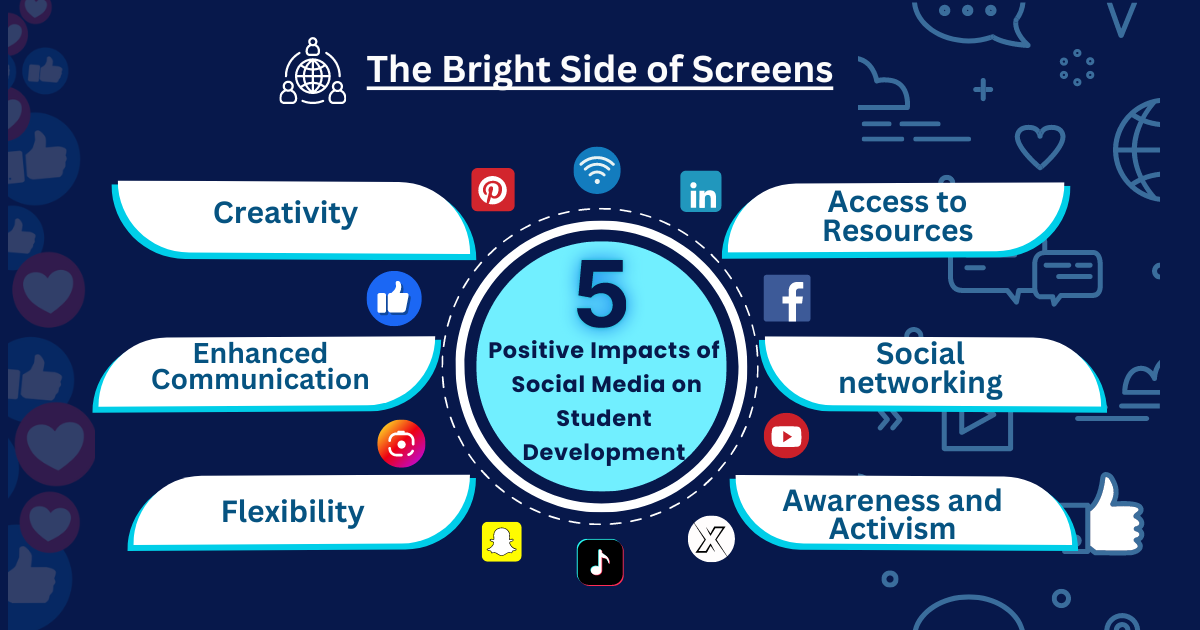
By providing enhanced learning opportunities, improving communication skills, fostering professional growth, promoting creativity and innovation, and building a global perspective, social media serves as a powerful tool for educational and personal growth. This comprehensive analysis explores these five positive impacts in detail.
Enhanced Learning Opportunities
Access to Diverse Educational Content
- One of the most significant advantages of social media is the access it provides to a vast array of educational content. Platforms like YouTube, Khan Academy, and LinkedIn Learning have revolutionized the way students learn.
- These platforms offer a wealth of instructional videos, tutorials, and lectures on virtually any subject imaginable. For instance, YouTube hosts channels dedicated to subjects ranging from mathematics and science to history and art. Students can find lessons tailored to their learning pace and style, which is particularly beneficial for those who may struggle with traditional classroom instruction.
- Khan Academy, with its extensive library of free, high-quality educational videos and practice exercises, allows students to delve into subjects at their own pace.
- This platform is especially valuable for those who need extra help with specific topics or want to explore subjects beyond their school curriculum.
- LinkedIn Learning, on the other hand, offers professional courses that help students develop skills relevant to their future careers, such as coding, graphic design, and project management.
Interactive Learning Experiences
- Social media also enhances learning through interactive experiences such as quizzes, games, and challenges.
- These tools make learning more engaging and enjoyable, helping students retain information better. For example, platforms like Kahoot! and Quizlet offer interactive quizzes that students can use to test their knowledge in a fun and competitive manner.
- Educational games available on various social media platforms turn learning into an entertaining activity, making it easier for students to grasp complex concepts.
- Challenges and competitions hosted on social media can also motivate students to excel.
- Participating in online coding challenges, math contests, or creative writing competitions encourages students to push their limits and achieve more. These interactive experiences not only make learning more appealing but also foster a spirit of healthy competition and perseverance.
Improved Communication Skills:
Effective Collaboration Tools
- The ability to collaborate effectively is crucial for academic and professional success. Social media platforms like Slack, Microsoft Teams, and Facebook Groups have become essential tools for facilitating collaboration among students.
- These platforms allow students to communicate in real-time, share documents, and work together on projects, regardless of their physical location.
- For instance, Slack provides a centralized platform where students can create channels for different subjects or projects, share resources, and discuss ideas.
- Microsoft Teams offers similar features, with the added benefit of integration with Microsoft Office tools, making it easy for students to collaborate on documents, presentations, and spreadsheets.
- Facebook Groups allow students to create private groups for their classes or study groups, enabling them to post updates, share notes, and collaborate on assignments.
Public Speaking and Writing Skills
- Creating content for social media can significantly improve students’ public speaking and writing skills.
- When students create blog posts, videos, or presentations, they practice organizing their thoughts, researching topics, and presenting their ideas clearly and persuasively.
- Platforms like Medium and WordPress allow students to publish their writings and receive feedback from a global audience, helping them refine their writing skills.
- Similarly, creating videos for platforms like YouTube or TikTok helps students develop public speaking skills.
- Crafting a compelling video requires clear articulation, engaging storytelling, and confident delivery. By regularly producing and sharing content, students can overcome the fear of public speaking and become more comfortable expressing themselves in front of an audience.
Networking and Professional Growth
Building Professional Connections
- Social media platforms such as LinkedIn provide invaluable opportunities for students to build professional connections. LinkedIn, in particular, is designed for professional networking, allowing students to connect with industry leaders, join professional groups, and follow companies of interest.
- These relationships may result in employment openings, internships, and insightful career counselling.
- Building a strong professional network while still in school gives students a head start in their careers. By connecting with professionals in their desired field, students can gain insights into industry trends, learn about potential career paths, and receive mentorship and guidance.
- These connections can also provide recommendations and references that are crucial when applying for jobs or internships.
Career Guidance and Opportunities
- Social media platforms offer a wealth of resources for career guidance and opportunities. Students can follow industry leaders and companies to stay updated on the latest trends and job openings.
- Many companies use social media to post job listings and recruit candidates, making it easier for students to find employment opportunities.
- In addition to job postings, social media provides access to a variety of career-related content.
- Webinars, live Q&A sessions, and articles shared by professionals offer valuable insights into different industries and careers.
- Students can learn about the skills and qualifications required for various roles, understand the challenges and rewards of different professions, and get advice on how to succeed in their chosen field.
Promoting Creativity and Innovation
Content Creation Platforms
- Social media platforms like Instagram, TikTok, and Pinterest provide students with the tools to express their creativity.
- These platforms encourage users to create and share visual content, such as photos, videos, and digital art. For example, Instagram allows students to showcase their photography skills, while TikTok is popular for its short, creative videos.
- Creating content for these platforms requires creativity and innovation. Students must think outside the box to produce content that stands out and engages their audience.
- This process helps them develop creative thinking and problem-solving skills, which are valuable in both academic and professional settings.
Innovation through Collaboration
- Social media fosters innovation by enabling students to collaborate in groups and communities.
- Online communities and forums allow students to connect with like-minded individuals, share ideas, and work together on projects. Platforms like Reddit, Discord, and specialized Facebook Groups provide spaces for students to engage in discussions, seek advice, and collaborate on creative endeavors.
- For example, students interested in coding can join programming communities where they can collaborate on open-source projects, participate in hackathons, and receive feedback on their work.
- These collaborative experiences not only enhance students’ technical skills but also teach them how to work effectively in teams and contribute to innovative projects.
Building a Global Perspective
Cultural Exchange
- Social media connects students with peers from around the world, promoting cultural exchange and understanding.
- Platforms like Instagram, Twitter, and Facebook allow students to interact with individuals from different cultures, share their own experiences, and learn about others’ traditions and lifestyles.
- Engaging in cultural exchange helps students develop empathy and appreciation for diversity.
- They learn to understand and respect different perspectives, which is crucial in our increasingly globalized world. By interacting with people from various backgrounds, students can broaden their horizons and develop a more inclusive worldview.
Developing a Well-Rounded View
- Exposure to diverse content and perspectives on social media helps students develop critical thinking skills and a well-rounded view of the world.
- Social media provides access to a wide range of opinions and information, allowing students to evaluate different viewpoints and form their own informed opinions.
- For example, students can follow news outlets, thought leaders, and academic institutions on social media to stay informed about current events and global issues.
- By engaging with diverse content, students learn to think critically, question assumptions, and consider multiple sides of an issue. This skill is essential for academic success and responsible citizenship.
Conclusion
Social media, when used effectively, offers significant benefits for student development. It provides enhanced learning opportunities through access to diverse educational content and interactive experiences.
It improves communication skills by facilitating collaboration and helping students develop public speaking and writing abilities. Social media helps students advance their careers by giving them access to career counselling and professional networks.
Furthermore, it promotes creativity and innovation through content creation and collaborative projects. Finally, social media helps students build a global perspective by facilitating cultural exchange and encouraging critical thinking.
By understanding and leveraging these positive impacts, students can maximize the benefits of social media and prepare themselves for future success.
Educators and parents can also play a crucial role in guiding students to use social media responsibly and effectively, ensuring that it serves as a valuable tool for their development.