Author: Xpresstoday.in

  • NASA-ISRO Working Together to Make India, Space Station, Launch NISAR in 2024

    Introduction

    The space race has evolved, and now it’s about collaboration rather than competition. NASA and ISRO (Indian Space Research Organisation) are joining forces to push the boundaries of space exploration. This groundbreaking partnership aims to launch the NISAR satellite in 2024 and lay the groundwork for India’s very own space station. This historic collaboration promises to enhance our understanding of Earth and beyond, making significant strides in technology and international relations.

    The Significance of NASA-ISRO Collaboration

    A New Era of Space Cooperation

    In an unprecedented move, NASA and ISRO have combined their expertise and resources to tackle some of the most pressing challenges in space exploration. This collaboration is not just about launching a satellite or building a space station; it’s about fostering a spirit of international cooperation that could set the stage for future joint missions.

    NISAR: A Game Changer

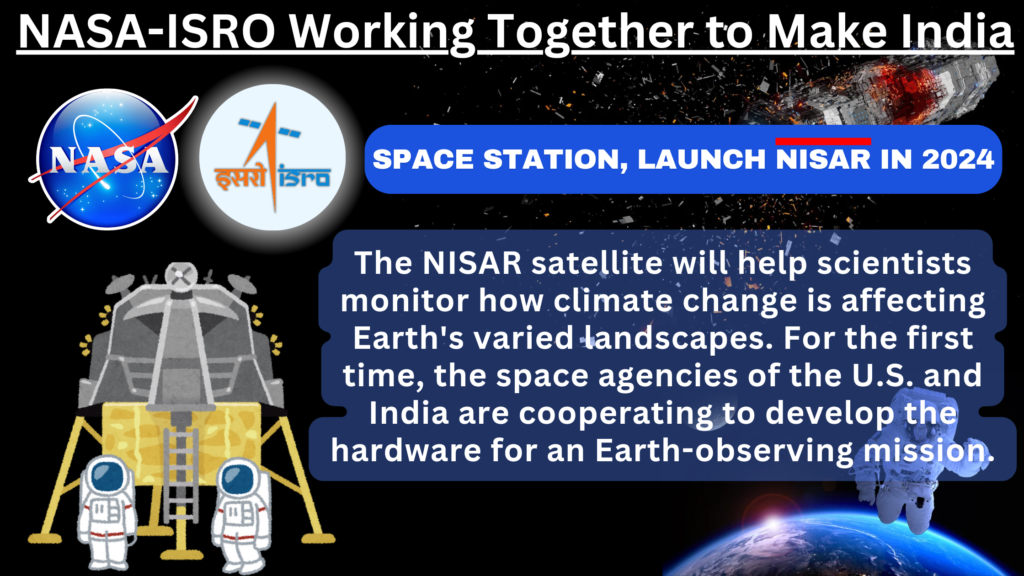
    NISAR (NASA-ISRO Synthetic Aperture Radar) is set to be one of the most advanced Earth observation satellites ever built. It will provide critical data on natural disasters, ecosystem disturbances, and climate change. By combining NASA’s and ISRO’s technological capabilities, NISAR aims to offer unparalleled insights into the planet’s natural processes.

    Advancing Global Space Science

    The collaboration is poised to advance global space science significantly. With NISAR, scientists can monitor the Earth’s surface with greater accuracy than ever before, helping predict and mitigate the effects of natural disasters such as earthquakes, tsunamis, and volcanic eruptions. This data is crucial for governments and organizations worldwide to prepare and respond effectively.
    Technological Advancements and Innovations

    Cutting-Edge Satellite Technology

    NISAR will be equipped with the most sophisticated radar imaging systems. Its dual-frequency radar (L-band and S-band) will allow it to observe and measure changes in the Earth’s surface, even through dense forests and clouds. This technology will provide high-resolution images essential for various applications, from agriculture to urban planning.

    The Space Station Initiative

    India’s ambition to establish a space station is a bold step towards becoming a significant player in space exploration. This station will serve as a research hub, allowing scientists to conduct experiments in microgravity, which can lead to breakthroughs in materials science, biology, and physics. The collaboration with NASA brings invaluable expertise and technology transfer, accelerating the project’s timeline and success.

    Future Predictions and Possibilities

    The success of these projects could pave the way for more collaborative efforts in the future. We could see joint missions to the Moon, Mars, and beyond, combining resources and knowledge to achieve what no single nation can accomplish alone. This partnership could also inspire other countries to join the global space community, fostering a new era of international cooperation in space exploration.

    Impacts on Different Regions

    Benefits for India

    For India, this partnership is a significant leap forward. It positions ISRO alongside the world’s leading space agencies, enhancing its reputation and capabilities. The technological advancements and knowledge transfer from NASA will boost India’s space program, enabling it to take on more ambitious projects in the future.

    Global Implications

    Globally, the collaboration sets a precedent for international partnerships in space exploration. It demonstrates that even in a highly competitive field like space, collaboration can lead to groundbreaking achievements that benefit all of humanity. The data and insights gained from NISAR will be shared with scientists and researchers worldwide, fostering a collaborative approach to solving global challenges.

    Regional Cooperation and Development

    The success of NASA-ISRO projects could stimulate regional cooperation in space science and technology. Neighboring countries might seek to collaborate with ISRO, leading to a more integrated and cooperative approach to space exploration in Asia. This could also boost regional economies by creating jobs and fostering innovation.

    Current Trends and Statistics

    Growing International Collaboration

    The trend of international collaboration in space exploration is on the rise. According to a report by Space Foundation, over 80 countries are now involved in space activities, with many engaging in international partnerships. The NASA-ISRO collaboration is a testament to this growing trend, highlighting the importance of pooling resources and expertise.

    Investment in Space Technology

    Investment in space technology is increasing globally. Governments and private companies are pouring billions into space exploration, with the global space economy projected to reach $1 trillion by 2040. The NASA-ISRO partnership is a part of this larger trend, showcasing the potential of collaborative investments to drive innovation and discovery.

    Advancements in Satellite Technology

    Technological advancements are at the core of modern space exploration. From reusable rockets to advanced satellites like NISAR, technology is evolving rapidly. These advancements are making space missions more cost-effective and efficient, allowing for more frequent and ambitious projects.

    Real-World Examples and Case Studies

    The Success of Chandrayaan and Mars Orbiter Missions

    India’s previous missions, such as Chandrayaan and the Mars Orbiter Mission (Mangalyaan), have been hailed as significant achievements in space exploration. These missions demonstrated ISRO’s capability to undertake complex space projects, earning international acclaim. The NASA-ISRO collaboration on NISAR and the space station builds on this legacy, taking it to new heights.

    NASA’s International Collaborations

    NASA has a long history of successful international collaborations. For example, the International Space Station (ISS) is a joint project involving NASA, Roscosmos (Russia), ESA (Europe), JAXA (Japan), and CSA (Canada). These collaborations have been instrumental in advancing space science and technology, providing a model for the NASA-ISRO partnership.

    The Role of Private Companies

    Private companies like SpaceX and Blue Origin are also playing a crucial role in modern space exploration. Their collaboration with space agencies has led to significant advancements, such as reusable rockets and commercial space travel. The involvement of private enterprises in the NASA-ISRO projects could further accelerate technological innovation and reduce costs.

    Challenges and Solutions

    Technical and Logistical Challenges

    One of the primary challenges in the NASA-ISRO collaboration is the integration of different technologies and systems. Ensuring compatibility and seamless operation requires meticulous planning and execution. However, both agencies have extensive experience in handling complex projects, making them well-equipped to tackle these challenges.

    Funding and Resource Allocation

    Securing adequate funding and resources is another critical challenge. Space projects are expensive, and ensuring sustained financial support is crucial. The collaboration between NASA and ISRO can help mitigate this issue by pooling resources and sharing costs, making the projects more financially viable.

    Political and Bureaucratic Hurdles

    Navigating the political and bureaucratic landscapes of two different countries can be complex. Differences in regulations, policies, and priorities need to be addressed to ensure smooth collaboration. Strong leadership and clear communication channels can help overcome these hurdles, ensuring the projects stay on track.

    Proposed Solutions

    • Enhanced Communication: Regular communication and coordination between NASA and ISRO teams can help address technical and logistical challenges.
    • Joint Funding Initiatives: Collaborative funding initiatives and shared investment strategies can ensure sustained financial support.
    • Policy Alignment: Aligning policies and regulations through bilateral agreements can streamline collaboration and reduce bureaucratic hurdles.

    Conclusion and Call to Action

    The NASA-ISRO collaboration represents a significant milestone in international space exploration. By working together, these two leading space agencies are set to achieve remarkable feats, from launching the advanced NISAR satellite to establishing India’s space station. This partnership not only advances space science but also fosters a spirit of global cooperation, paving the way for future joint missions.

    As we look to the future, the success of these projects depends on continued support and collaboration. Governments, private companies, and international organizations must come together to ensure sustained investment in space exploration. By doing so, we can unlock new discoveries; address global challenges and inspire the next generation of scientists and explorers.

    Engage with Us

    What are your thoughts on the NASA-ISRO collaboration? How do you think it will impact the future of space exploration? Share your opinions in the comments below and join the conversation. Don’t forget to share this article with your friends and colleagues to spread the word about this exciting partnership.

    External Resources

  • Unveiling the Ram Rahim Case: Shocking Details You Need to Know

    Introduction

    The case of Gurmeet Ram Rahim Singh, a self-styled godman and leader of the Dera Sacha Sauda, has captivated the public and media for years due to its shocking revelations and significant impact on society.

    Understanding this case is crucial to comprehend the interplay of power, religion, and justice in contemporary India.

    Brief Overview of the Ram Rahim Case

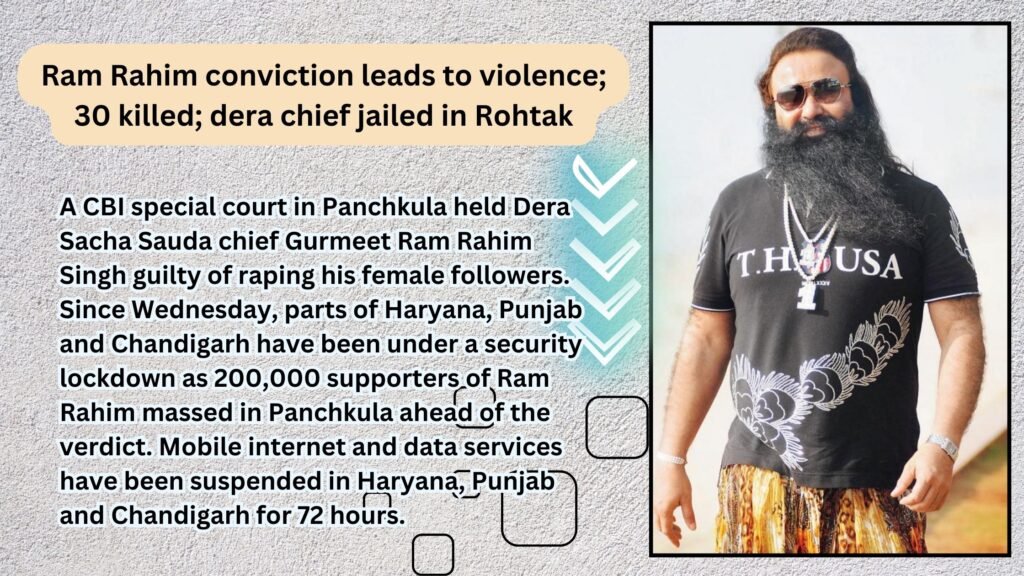
    Gurmeet Ram Rahim Singh, the head of the Dera Sacha Sauda, faced serious allegations ranging from sexual assault to murder.

    His conviction in 2017 led to widespread violence, bringing the functioning and influence of spiritual organizations in India under scrutiny.

    Importance of Understanding the Case

    The Ram Rahim case highlights critical issues related to the abuse of power, the manipulation of religious sentiments, and the challenges faced by legal systems in dealing with influential figures.

    It also underscores the societal impact of such cases on followers and the broader community.

    Background of Ram Rahim

    Early Life and Rise to Power

    Gurmeet Ram Rahim Singh was born on August 15, 1967, in Sri Gurusar Modia, Rajasthan. He became the leader of Dera Sacha Sauda in 1990, succeeding Shah Satnam Singh, and quickly rose to prominence due to his charismatic leadership and social work.

    Role as a Leader of Dera Sacha Sauda

    Under his leadership, Dera Sacha Sauda expanded its influence significantly, claiming millions of followers and engaging in various social welfare activities.

    Ram Rahim’s image was carefully crafted through his involvement in entertainment and media.

    Dera Sacha Sauda: An Overview

    Origin and Mission

    Founded in 1948 by Mastana Balochistani, Dera Sacha Sauda’s mission revolves around spiritual teachings, social service, and promoting a drug-free lifestyle. The sect combines elements of Sikhism and Hinduism, attracting a diverse following.

    Influence and Followers

    The organization claims to have millions of followers worldwide, particularly in the states of Haryana and Punjab.

    It operates numerous ashrams, hospitals, and educational institutions, significantly impacting the local communities.

    The Allegations Against Ram Rahim

    Initial Allegations and Investigation

    The first major allegations against Ram Rahim emerged in the early 2000s when two female followers accused him of rape.

    A letter detailing these accusations reached the Punjab and Haryana High Court in 2002, prompting an investigation by the Central Bureau of Investigation (CBI).

    Nature of the Crimes

    Ram Rahim was accused of sexually assaulting female followers, murdering journalist Ram Chander Chhatrapati (who exposed his activities), and coercing followers into illegal activities. The allegations painted a grim picture of exploitation and violence within the Dera.

    Key Events in the Case

    Timeline of Major Events

    • 2002: Allegations of rape surface, and the CBI begins its investigation.
    • 2007: Charges are filed against Ram Rahim.
    • 2017: Ram Rahim is convicted of rape, leading to widespread violence.
    • 2019: Conviction in the murder case of journalist Ram Chander Chhatrapati.

    Arrest and Legal Proceedings

    Ram Rahim was arrested in August 2017 following his conviction in the rape case. The legal proceedings were marked by high security and significant public interest.

    The Conviction and Sentencing

    Details of the Trial

    The trial took place in a specially convened court in Haryana, where Ram Rahim was found guilty of raping two female followers.

    The judge described him as a “wild beast” who deserved no leniency.

    Sentencing and Public Reaction

    Ram Rahim was sentenced to 20 years in prison. The conviction led to violent protests by his followers, resulting in deaths and widespread destruction.

    The public reaction was polarized, with many supporting the victims and others in denial of his crimes.

    Impact on Followers and the Community

    Reactions from Followers

    The conviction led to a deep sense of betrayal among many followers, some of whom continued to support Ram Rahim, believing in his innocence.

    Others left the Dera, disillusioned by the revelations.

    Social and Cultural Impact

    The case highlighted the dangers of blind faith and the potential for abuse within religious organizations.

    It sparked debates on the need for greater oversight and accountability.

    Controversies and Conspiracy Theories

    Major Controversies Surrounding the Case

    The case was surrounded by various controversies, including allegations of political patronage, manipulation of evidence, and attempts to influence witnesses. These controversies added layers of complexity to the proceedings.

    Media Coverage and Public Perception

    The media played a crucial role in bringing the case to light, but it also faced criticism for sensationalism.

     Public perception was divided, reflecting broader societal tensions regarding faith and justice.

    Political Implications

    Government Response

    The government’s response included imposing curfews and deploying military forces to control the violence following the conviction.

     The case also led to calls for stricter regulations on religious organizations.

    Legal and Ethical Considerations

    The legal ramifications included discussions on the protection of witnesses, the efficiency of the judicial process, and the ethical responsibilities of religious leaders. The case underscored the need for a balanced approach to justice and faith.

    The Aftermath

    Current Status of Ram Rahim

    As of now, Ram Rahim remains incarcerated, serving his sentence. His appeals for bail and leniency have been consistently denied by the courts.

    Changes in Dera Sacha Sauda

    The Dera continues to operate under new leadership, but its influence has waned significantly. Efforts have been made to distance the organization from Ram Rahim’s criminal activities.

    Lessons Learned from the Case

    Insights and Takeaways

    The Ram Rahim case offers critical insights into the vulnerabilities within religious institutions and the importance of legal accountability.

    It also highlights the need for greater awareness and education among followers to prevent exploitation.

    Comparative Analysis with Other Cases

    Comparisons can be drawn with other high-profile cases of religious leaders abusing power, such as Asaram Bapu and Swami Nithyananda.

    These cases collectively underscore the recurring issues of unchecked authority and the exploitation of faith.

    Conclusion

    The Ram Rahim case serves as a stark reminder of the potential for abuse within religious organizations and the importance of vigilance, transparency, and justice.

    It calls for introspection within society regarding the balance between faith and rationality.

    FAQs

    What are the main charges against Ram Rahim?

    The main charges against Ram Rahim include rape, murder, and criminal intimidation. He was convicted of raping two female followers and for his involvement in the murder of journalist Ram Chander Chhatrapati.

    How did Ram Rahim maintain his influence over followers?

    Ram Rahim maintained his influence through a combination of charisma, social welfare activities, and the promise of spiritual guidance. His control was also reinforced by fear and coercion, making it difficult for followers to dissent.


  • Anti-Microbial Resistance: bacteria kill 5million people every year, says Lancet study

    Overview:

    What is Anti-Microbial Resistance?

    Anti-microbial resistance (AMR) occurs when microorganisms such as bacteria, viruses, fungi, and parasites evolve mechanisms to resist the effects of medications that once effectively treated them.

    This resistance renders standard treatments ineffective, leading to persistent infections, increased transmission, and higher mortality rates. AMR is a natural phenomenon accelerated by human actions, posing a significant threat to global health, food security, and development.

    Reasons for Anti-Microbial Resistance

    1. Overuse and Misuse of Antibiotics:
      • Human Medicine: The inappropriate prescription of antibiotics for viral infections, like the common cold, and the excessive use of broad-spectrum antibiotics contribute to resistance.
      • Patients often demand antibiotics, and physicians may yield to pressure even when not medically justified.
      • Agriculture: The widespread use of antibiotics in livestock for growth promotion and disease prevention contributes significantly to AMR.
      • Antibiotics are often administered to healthy animals, creating a breeding ground for resistant bacteria that can transfer to humans through food consumption.
    2. Poor Infection Prevention and Control:
      • Healthcare Settings: Inadequate infection control practices in hospitals and clinics, including poor hand hygiene and sterilization protocols, can lead to the spread of resistant bacteria.
      • Community Settings: Lack of public health infrastructure and sanitation in many parts of the world contributes to the spread of infections and the emergence of resistance.
    3. Lack of New Antibiotics:
      • The pharmaceutical industry faces significant challenges in developing new antibiotics due to scientific, regulatory, and economic barriers.
      • The process is costly and time-consuming, with a limited return on investment compared to drugs for chronic diseases, leading to a stagnant pipeline of new antimicrobial agents.
    4. Global Travel and Trade:
      • The interconnectedness of the world through travel and trade facilitates the rapid spread of resistant bacteria across borders.
      • Infections resistant to treatment in one region can quickly become a global issue.
    5. Environmental Factors:
      • Environmental contamination with antibiotics from pharmaceutical manufacturing, agricultural runoff, and improper disposal of medical waste contributes to the presence of antibiotics in the environment, fostering resistance in natural microbial communities.

    Confronting Anti-Microbial Resistance Effectively

    1. Strengthening Surveillance Systems:
      • Monitoring and Data Collection: Establish robust global and national surveillance systems to monitor AMR trends.
      • Data on resistance patterns can inform targeted interventions and policy decisions.
      • International Collaboration: Enhance cooperation among countries to share data and resources, enabling a coordinated global response to AMR.
    2. Optimizing Antibiotic Use:
      • Antimicrobial Stewardship Programs (ASPs): Implement ASPs in healthcare settings to promote the appropriate use of antibiotics.
      • These programs involve guidelines for prescribing antibiotics, education for healthcare providers, and monitoring of antibiotic use and resistance.
      • Public Awareness Campaigns: Educate the public on the dangers of antibiotic misuse and the importance of following prescribed treatments.
      • Campaigns can reduce the demand for unnecessary antibiotics and promote adherence to prescribed regimens.
    3. Infection Prevention and Control (IPC):
      • Healthcare Practices: Strengthen IPC measures in hospitals and clinics, including strict hand hygiene, sterilization protocols, and isolation procedures for patients with resistant infections.
      • Vaccination Programs: Promote vaccination to reduce the incidence of infections, thereby decreasing the need for antibiotics and the opportunity for resistance to develop.
    4. Research and Development (R&D):
      • New Antibiotics: Encourage investment in R&D for new antibiotics through incentives such as public-private partnerships, grants, and streamlined regulatory processes.
      • Governments and international organizations can play a crucial role in supporting research initiatives.
      • Alternative Therapies: Explore and develop alternative treatments to antibiotics, such as phage therapy, immunotherapies, and probiotics, to provide additional tools for combating infections.
    5. Environmental Measures:
      • Regulation of Antibiotic Use in Agriculture: Implement regulations to limit the use of antibiotics in livestock and promote alternative practices for disease prevention, such as improved animal husbandry and vaccination.
      • Environmental Management: Address environmental contamination by regulating the discharge of antibiotics from pharmaceutical factories and improving waste management practices to reduce the spread of resistant bacteria in the environment.
    6. Strengthening Global Governance and Policy:
      • International Agreements: Foster international agreements and frameworks to combat AMR, such as the World Health Organization’s (WHO) Global Action Plan on AMR.
      • These frameworks should encourage coordinated efforts and resource sharing among nations.
      • National Action Plans: Develop and implement national action plans tailored to the specific needs and challenges of each country, aligning with global strategies to address AMR comprehensively.

    Conclusion

    Anti-microbial resistance is a complex and multifaceted challenge that requires a coordinated global response. Understanding the underlying causes of AMR, including the overuse and misuse of antibiotics, poor infection control practices, lack of new antibiotics, global travel and trade, and environmental factors, is crucial for developing effective strategies to combat it.

     By strengthening surveillance systems, optimizing antibiotic use, enhancing infection prevention and control, investing in research and development, implementing environmental measures, and fostering strong global governance, we can confront AMR effectively and safeguard the health of future generations.

  • Why ‘Buying London’ Might Be the Most Despised TV Show Ever

    Introduction

    Real estate shows are a staple of modern television, offering viewers a peek into the world of high-stakes property deals and luxurious living. However, not all of these shows hit the mark.

    Over view

    ‘Buying London,’ a real estate series set in one of the world’s most expensive and exclusive cities, has garnered strong negative reactions from audiences. This blog post aims to dissect why ‘Buying London’ is often considered the most hateable TV show ever made.

    Section 1: The Concept of ‘Buying London’

    Synopsis and Format

    ‘Buying London’ follows prospective buyers as they tour some of the most extravagant properties in the British capital.

    Each episode typically features a different real estate agent showing high-end homes to wealthy clients, often accompanied by discussions about property values, market trends, and investment potential.

    Target Audience

    The show is aimed at real estate enthusiasts, luxury lifestyle aficionados, and viewers who enjoy aspirational content.

    However, its appeal is intended for those fascinated by London’s elite property market, which is inherently exclusive and far removed from the realities of most viewers’ lives.

    Why It Misses the Mark

    ‘Buying London’ falls short because it often alienates its audience. The show’s format and content are steeped in wealth and luxury, making it difficult for average viewers to relate.

     The constant display of affluence and the lack of genuine human connection or relatable struggles make the show feel out of touch and unapproachable.

    Section 2: Characters and Hosts

    Host Analysis

    The hosts of ‘Buying London’ are polished and professional, but they often come across as overly slick and insincere.

    Their presentation style can feel more like sales pitches than genuine conversations, which can be off-putting to viewers seeking authenticity.

    Participant Profiles

    The buyers featured on the show are typically wealthy individuals or couples looking for high-end properties.

    They are often portrayed as demanding and out of touch with reality, which can make them unlikeable and difficult for viewers to empathize with.

    Chemistry and Interaction

    The interaction between hosts and participants often lacks warmth and authenticity. The conversations are heavily transactional, focusing on property features and investment potential rather than personal stories or emotional connections.

    This transactional nature contributes to the show’s negative perception, as it feels more like a commercial than a human interest story.

    Section 3: Production and Aesthetic Issues

    Visual and Audio Quality

    While the production values are generally high, with slick visuals and clear audio, the show’s aesthetic can come across as overly polished and artificial.

    This level of polish can make the show feel sterile and devoid of personality.

    Script and Dialogue

    The scripting and dialogue are another major issue. The conversations often feel rehearsed and unnatural, lacking the spontaneity and genuine emotion that make reality TV engaging.

    This scripted feel detracts from the viewing experience, making it hard to invest in the show.

    Editing Choices

    The editing style of ‘Buying London’ is fast-paced and flashy, with quick cuts and dramatic music.

    While this might be intended to create excitement, it often has the opposite effect, making the show feel chaotic and hard to follow.

    The editing choices can also detract from the properties themselves, as the camera rarely lingers long enough for viewers to appreciate the details of the homes being shown.

    Section 4: Cultural and Societal Missteps

    Portrayal of Wealth

    One of the most significant criticisms of ‘Buying London’ is its portrayal of wealth. The show unabashedly flaunts luxury and excess, which can come across as tone-deaf, especially in a time when economic inequality is a pressing issue.

    The focus on opulence can be jarring and unappealing to viewers who are dealing with more modest financial realities.

    Cultural Insensitivity

    There are instances where ‘Buying London’ seems out of touch with broader societal issues. For example, the show’s emphasis on expensive properties and affluent buyers can feel insensitive in the context of London’s housing crisis, where affordable housing is a significant concern.

    This lack of awareness can alienate viewers and contribute to the show’s negative reputation.

    Public Reaction

    The public and critical backlash to ‘Buying London’ has been significant.

    Social media is rife with negative comments, with viewers expressing frustration and distaste for the show’s focus on wealth and superficiality.

     Reviews often highlight the show’s lack of relatability and emotional depth, further cementing its status as one of the most despised TV shows.

    Section 5: Is There Any Redeeming Value?

    Counterpoints

    Despite its many flaws, ‘Buying London’ does have some redeeming qualities.

     For those interested in the high-end property market, the show offers a glimpse into some of the most exclusive homes in London.

    The production values, while sometimes overly polished, do provide a visually appealing viewing experience.

    Potential Improvements

    To improve, ‘Buying London’ could focus more on the human stories behind the property transactions.

    Including more diverse buyers and highlighting their personal journeys and challenges could make the show more relatable and engaging.

    Additionally, toning down the excessive focus on wealth and luxury and addressing broader societal issues more sensitively could help the show connect with a wider audience.

    Conclusion

    Summary of Criticism

    ‘Buying London’ is often considered the most hateable TV show due to its unrelatable concept, unlikeable characters, overly polished production, and cultural insensitivity.

     The show’s focus on wealth and luxury alienates viewers and feels out of touch with broader societal issues.

    Final Thoughts

    The impact of shows like ‘Buying London’ on the real estate reality TV genre and television, in general, is significant.

    They highlight the growing divide between the wealthy and the average viewer, and the need for more inclusive and relatable content in reality TV.

    Call to Action

    What are your thoughts and experiences with ‘Buying London’?

    Do you agree with the criticisms, or do you find some value in the show?

    Share your thoughts in the comments below.

  • Pune Porsche Accident: Shocking Details Revealed – Top Ten Developments

    Introduction

    The city of Pune was left in shock following a tragic accident involving a Porsche sports car, driven by a 17-year-old, which resulted in the deaths of two software engineers.

    This incident has sparked intense debates, legal battles, and public outcry. Here are the top ten developments in this shocking case.

    • Accident Details

    Late at night on May 20, 2024, a Porsche 911 was involved in a catastrophic accident near the busy Koregaon Park area. The car, reportedly speeding at an alarming rate, collided with multiple vehicles before crashing into a roadside structure.

    The impact of the collision was devastating, resulting in the immediate deaths of two young software engineers, Priya Mehta and Arjun Sharma, who were on their way home from a late-night shift. Several other individuals sustained serious injuries, and the surrounding property was significantly damaged.

    • Accused Identified

    The driver of the Porsche has been identified as a 17-year-old minor, Ajay Khanna, the son of a prominent businessman in Pune. Khanna, who did not possess a valid driver’s license, had taken his father’s high-performance vehicle for a late-night drive.

    Initial reports and subsequent investigations indicated that he was driving under the influence of alcohol, adding another layer of severity to the incident.

    • Bail Controversy

    The granting of bail to Ajay Khanna has sparked a significant backlash on social media and beyond. Within hours of his arrest, Khanna’s legal team managed to secure his release on bail, citing his status as a minor and the need for him to be in a supportive environment.

    This rapid bail approval has led to accusations of preferential treatment, given his family’s wealth and influence. The public perception is that justice is being subverted due to the accused’s social standing.

    • Eye Witness Accounts

    Eyewitnesses have provided harrowing details of the accident. Multiple accounts describe the Porsche as being driven at an extremely high speed, with some estimating it to be over 150 km/h.

    Witnesses reported erratic driving behavior just moments before the crash. One particularly compelling account came from a local cab driver who narrowly avoided being hit by the speeding Porsche. He described Khanna’s driving as reckless and dangerously fast, corroborating the initial findings of the police investigation.

    • Legal Proceedings

    The legal proceedings against Ajay Khanna are gaining intense media coverage. Charges have been filed for culpable homicide not amounting to murder, rash and negligent driving, and driving under the influence of alcohol.

    Given Khanna’s minor status, the case has been referred to the Juvenile Justice Board. This has led to a complex legal battle over the appropriate venue and charges, with many arguing for the case to be transferred to an adult court due to the severity of the crime and its consequences.

    • Public Outcry

    The public reaction to the accident and subsequent legal developments has been one of outrage. Protests have erupted in various parts of Pune, with citizens demanding stricter laws and accountability for reckless driving.

    Social media has been ablaze with calls for justice for the victims, with hashtags such as #JusticeForPriyaAndArjun trending nationwide. The outcry is not just directed at Khanna but also at the perceived inefficiencies and biases within the legal system that allow such incidents to occur.

    • Policy Debates

    In the aftermath of the accident, there have been heated policy debates regarding juvenile justice and driving laws in India.

    Critics argue that current laws are inadequate and fail to serve as a deterrent to dangerous behaviors. There is a strong push for reforms in juvenile justice, particularly in cases involving serious crimes.

    Additionally, there is a growing demand for stricter regulations around the issuance of driving licenses and harsher penalties for underage and drunk driving.

    • Future Implications

    The long-term implications of this case could be significant. If the case leads to substantial legal and policy changes, it may set a precedent for how similar cases are handled in the future.

    Possible changes include lowering the legal blood alcohol content (BAC) limits for drivers, implementing more rigorous testing and monitoring of young drivers, and establishing clearer guidelines for when juveniles can be tried as adults in serious cases. These changes aim to enhance road safety and ensure that the legal system effectively deters reckless behavior.

    • Road Safety Consequences

    This accident has brought to light the severe consequences of high-speed driving and inadequate road safety measures. There is a renewed focus on implementing better road safety infrastructure, such as speed cameras, more frequent patrolling in high-risk areas, and stricter enforcement of existing traffic laws.

     The accident has also highlighted the need for comprehensive driver education programs that emphasize the dangers of high-speed and drunk driving, especially targeting young and inexperienced drivers.

    • Reactions from Influencers and Celebrities

    Influencers and celebrities have also weighed in on the issue, using their platforms to raise awareness about road safety and the importance of stringent legal measures.

    Many have shared personal stories of loss due to similar incidents, further fueling the demand for change. Their involvement has helped keep the issue in the public eye and has played a role in maintaining the pressure on policymakers and legal authorities to act decisively.

    Conclusion

    The Pune Porsche accident involving a 17-year-old driver has served as a stark reminder of the risks associated with reckless and drunk driving.

    The deaths of Priya Mehta and Arjun Sharma have sparked a nationwide call for justice and significant reforms in juvenile justice and driving laws.

    As the legal proceedings unfold, this case is likely to continue influencing public policy and societal attitudes towards road safety and the legal responsibilities of young drivers.

    The hope is that through stringent enforcement of laws, better education on the dangers of reckless driving, and comprehensive legal reforms, such tragedies can be prevented in the future.

    The Pune Porsche accident stands as a crucial turning point, underscoring the need for immediate and effective action to ensure safer roads and a more just legal system in India.

  • CHINA ‘S NIO ONVO BRAND LAUNCHES ELETRIC VEHICLE

    Introduction to NIO and the ONVO Brand

    NIO, a leading Chinese electric vehicle (EV) manufacturer, has been at the forefront of the EV revolution with a strong commitment to innovation, quality, and sustainability.

    Founded by William Li, NIO has quickly established itself as a key player in the global electric vehicle market.

    Recently, NIO launched its new sub-brand, ONVO, to cater to a broader audience and further expand its footprint in the EV market. The ONVO brand aims to provide high-quality electric vehicles at more accessible price points while maintaining NIO’s standards of safety, technology, and performance.

    NIO ONVO L60 Midsize SUV: Overview

    The flagship model under the ONVO brand, the L60 midsize SUV, is designed to compete in the highly competitive midsize SUV segment.  Priced starting at 219,900 yuan (approximately $30,465 or £23,990), the L60 offers a blend of advanced technology, safety, comfort, and driving performance. This model is expected to attract a wide range of customers, from tech-savvy individuals to families looking for a reliable and efficient vehicle

    Detailed Aspects of the NIO ONVO L60

    Safety

    Comfort

    Smart Cabin Technology

    Driving Range and Recharging Convenience

    Ride Quality

    Assisted Driving Capabilities

    Safety

    Safety is a paramount consideration for NIO, and the ONVO L60 is no exception.

     The vehicle is equipped with a comprehensive suite of safety features designed to protect occupants and enhance overall vehicle safety. Key safety features include:

    Advanced Driver Assistance Systems (ADAS): The L60 incorporates a full array of ADAS, including automatic emergency braking, lane-keeping assist, adaptive cruise control, and blind-spot monitoring.

    These systems work together to help prevent accidents and reduce the severity of collisions.

    Structural Integrity: The L60’s body structure is designed using high-strength steel and aluminum to provide maximum protection in the event of a crash.

    The vehicle has undergone rigorous crash testing to meet global safety standards.

    Airbags and Passive Safety: The L60 is equipped with multiple airbags, including front, side, and curtain airbags, to protect passengers in all seating positions.

    Additionally, the vehicle features reinforced seat belts and head restraints to minimize injury in the event of an accident.

    Driver Monitoring System: To ensure the driver remains attentive, the L60 is equipped with a driver monitoring system that uses cameras and sensors to detect signs of drowsiness or distraction.

    If detected, the system can alert the driver and even initiate preventive measures.

    Comfort

    The ONVO L60 is designed to provide a comfortable and luxurious driving experience for all occupants. Key comfort features include:

    Spacious Interior: The L60 offers a roomy cabin with ample legroom and headroom for both front and rear passengers.

    The seats are designed for long-distance comfort, with adjustable lumbar support and premium materials.

    Climate Control: The vehicle features a dual-zone automatic climate control system, allowing the driver and passengers to set their preferred temperatures.

    Additionally, the rear seats have independent climate controls for added comfort.

    Noise Reduction: NIO has paid special attention to sound insulation, incorporating noise-canceling materials and acoustic glass to minimize road and wind noise.

    This creates a serene cabin environment, ideal for relaxation or conversation.

    Luxury Materials: The interior of the L60 is adorned with high-quality materials, including soft-touch surfaces, leather upholstery, and real wood or metal accents.

    These elements contribute to a premium feel and enhance the overall driving experience.

     Smart Cabin Technology

    NIO has integrated cutting-edge technology into the ONVO L60’s cabin to create a smart, connected environment. Key technology features include:

    Infotainment System: The L60 is equipped with a large, high-resolution touchscreen infotainment system that provides access to navigation, entertainment, and vehicle settings.

     The system supports smartphone integration through Apple CarPlay and Android Auto.

    Digital Instrument Cluster: A customizable digital instrument cluster displays essential driving information, such as speed, range, and navigation directions, directly in the driver’s line of sight.

    Voice Control: The L60 features an advanced voice control system that allows the driver and passengers to operate various functions, such as climate control, navigation, and media, using natural language commands.

    Connectivity: The vehicle offers seamless connectivity options, including 4G LTE Wi-Fi hotspot capability, multiple USB ports, and wireless charging for compatible devices.

    This ensures that occupants can stay connected and charged during their journeys.

    Ambient Lighting: Customizable ambient lighting adds a touch of sophistication to the cabin, allowing occupants to select from a range of colors to match their mood or preferences.

     Driving Range and Recharging Convenience

    The ONVO L60 is designed to offer a practical and efficient driving experience, with a focus on range and recharging convenience. Key features include:

    Battery Options: The L60 is available with multiple battery options, allowing customers to choose a configuration that best suits their driving needs.

    The base model features a 70 kWh battery pack, while higher trims offer 85 kWh and 100 kWh options.

    Driving Range: Depending on the battery configuration, the L60 offers an impressive driving range of up to 550 kilometers (342 miles) on a single charge, making it suitable for both urban commutes and long-distance travel.

    Fast Charging: The L60 supports fast charging, enabling the battery to be charged from 10% to 80% in just 30 minutes using a high-power DC fast charger.

    This ensures minimal downtime during recharging stops.

    Home Charging: For added convenience, the L60 can be charged using a standard home charging unit. The vehicle is compatible with both Level 1 (120V) and Level 2 (240V) chargers, allowing for flexible charging options at home or public charging stations.

    Battery Swap Technology: NIO’s innovative battery swap technology is also available for the L60.

    This allows drivers to exchange their depleted battery for a fully charged one in a matter of minutes at designated battery swap stations, eliminating the need to wait for recharging.

    Ride Quality

    The ONVO L60 is engineered to provide a smooth and comfortable ride, even on challenging road surfaces. Key features contributing to ride quality include:

    Suspension System: The L60 features an advanced suspension system with adaptive dampers that automatically adjust to road conditions and driving style.

    This ensures optimal balance between comfort and handling.

    Chassis Design: The vehicle’s chassis is designed for stability and precision, with a low center of gravity and balanced weight distribution.

    This enhances handling and reduces body roll during cornering.

    Noise and Vibration: Extensive measures have been taken to reduce noise and vibration, including the use of acoustic glass, sound-deadening materials, and precise engineering of the drivetrain and suspension components.

    This results in a quiet and refined ride experience.

    Steering System: The L60 is equipped with an electric power steering system that provides precise and responsive control.

    The system can be adjusted to offer different levels of assistance, catering to the driver’s preferences.

    Assisted Driving Capabilities

    NIO’s commitment to advanced driving technologies is evident in the L60’s suite of assisted driving capabilities.

    These features are designed to enhance safety and convenience during driving. Key assisted driving features include:

    NIO Pilot: The L60 is equipped with NIO’s proprietary assisted driving system, NIO Pilot, which offers a range of autonomous driving features.

    These include highway assist, traffic jam assist, automatic lane changing, and park assist.

    High-Resolution Cameras and Sensors: The vehicle is equipped with an array of high-resolution cameras, ultrasonic sensors, and radar units that provide a 360-degree view of the surroundings.

    This enables precise detection of obstacles, pedestrians, and other vehicles.

    Adaptive Cruise Control: The adaptive cruise control system maintains a set speed and distance from the vehicle ahead, automatically adjusting speed to match traffic conditions.

    This reduces driver fatigue during long-distance travel.

    Lane Keeping Assist: The lane keeping assist system helps the driver stay within the lane by providing gentle steering inputs.

     If the vehicle begins to drift out of its lane without a turn signal, the system alerts the driver and can apply corrective steering.

    Automated Parking: The L60 features an automated parking system that can identify suitable parking spaces and assist with parallel and perpendicular parking maneuvers.

    The driver can control the system via the infotainment screen or a dedicated mobile app.

    NIO’s Expansion in the Electric Vehicle Market

    Under the leadership of CEO William Li, NIO has been strategically expanding its footprint in the electric vehicle market, both domestically and internationally. Key initiatives include:

    Global Market Expansion: NIO has been actively expanding its presence in key global markets, including Europe and North America.

     The company has established sales and service centers in countries like Norway and Germany, with plans to enter more markets in the near future.

    Innovative Battery Solutions: NIO’s battery swap technology is a significant differentiator in the EV market.

    The company continues to expand its network of battery swap stations, making long-distance travel more convenient for NIO owners.

    Sustainability Initiatives: NIO is committed to sustainability and reducing its environmental impact.

    The company invests in renewable energy sources and works to minimize the carbon footprint of its manufacturing processes.

    Customer Experience: NIO places a strong emphasis on customer experience, offering premium services such as mobile service units, 24/7 customer support, and dedicated NIO Houses – exclusive spaces for NIO owners to socialize and engage with the brand.

    Research and Development: NIO invests heavily in research and development to stay at the forefront of automotive technology.

     This includes advancements in battery technology, autonomous driving, and vehicle