Category: Blog

Your blog category

  • Manoj Kumar: 7 Tributes to Bollywood’s Patriotic Hero

    Manoj Kumar: 7 Tributes to Bollywood’s Patriotic Hero

    Whenever we talk about patriots in Bollywood, the first name that comes to our mind is Manoj Kumar. He not only played the role of a patriot in films but also gave the message of unity, renunciation and sacrifice to the entire country through his films. This is the reason why he was fondly called Bharat Kumar.

    Manoj Kumar’s real name was Hari Krishna Giri Goswami. He was born on 24 July 1937 in Abbottabad [now Pakistan]. After partition, his family came to India and he completed his studies in Delhi. He was fond of films since childhood and had a dream in his heart to do something big through films.

    He started his film career in 1957 with the film Fashion but he got recognition in the 1964 film Woh Kaun Thi?. After this, he never looked back in his life but he got real success only when he chose films based on patriotism and he got a new identity.

    A brief biography

    Manoj Kumar not only acted but also wrote. His most famous patriotic films are:

    Shahid [1965] in the role of Bhagat Singh

    Upkar [1967] in which he gave the message of Jai Jawan Jai Kisan

    Purab Aur Paschim [1970] comparison between Indian culture and western civilization

    Kranti [1981] a grand film based on the freedom struggle

    In these films, he gave the message of light to the people of today. He is alive in the hearts of the audience. He made his simplicity, sacrifice and patriotism the soul of his films. His films had such a deep impact that the Government of India honoured him many times. He also received prestigious awards like Padma Shri National Film Award and Dada Saheb Phalke Award.

    Manoj Kumar was not just an actor, he was an ideologue. His films not only entertained the audience but also inspired them to become a true Indian. His dialogues, his songs and the characters he played still rule the hearts of the people.

    The biggest specialty of his life was that he always made Indianness his identity. When other actors were lost in the world of glamour, Manoj Kumar was there on the big screen to raise the questions of the country. This was the reason that his contribution can never be recalled.

    Even though Manoj Kumar is not among us today, the films he made, the characters he played and his personality full of patriotism will always make us feel his presence

    Manoj Kumar’s Film Journey

    How did he become Bharat Kumar

    Manoj Kumar’s film journey has been a very inspiring journey from being an ordinary actor to becoming an example of patriotism. He started his career in Bollywood in 1957 but he got real recognition from the 1964 film Woh Kaun Thi in which his acting was highly praised.

    Manoj Kumar’s real turning point came from the 1965 film Shaheed, in which he played the role of revolutionary Bhagat Singh. This film made a special place for him in the hearts of the audience but he got the title of Bharat Kumar. After the 1957 film Upkaar, in this film he played the role of both a farmer and a soldier and worked to spread the slogan Jai Jawan Jai Kisan to the masses.

    After this, he worked in many patriotic films one after the other like Purva Aur Paschim, Roti Kapda Aur Makaan, Kranti.

    In these films, he not only acted but also directed, wrote and produced. In each of his films, a glimpse of Indian culture, patriotism and social issues was seen. His speciality was that he was more emotional than acting. The soul of his films was India and this became his identity. Bharat Kumar not only changed cinema but also changed an entire era in which cinema, society and country moved together.

    Some of his famous Desh Bhakti films

    Whenever we talk about films based on Desh Bhakti, we remember the name of Manoj Kumar. He not only adopted it but also took it to a new height. His films reflected the depth of love for the country, sacrifice and culture.

    Manoj Kumar’s most famous Desh Bhakti film was Upkar (1957). This film was inspired by the Jai Jawan Jai Kisan slogan of former Prime Minister of India Lal Bahadur Shastri. In the film, he played the character of a person who sacrifices his land for the country. This film earned him the title of Bharat Kumar.

    After this came the film Purva Aur Paschim in which he showed the clash of Indian culture and Western civilization in a very beautiful way. This film is considered an ideal film in the context of Desh Bhakti today.

    In Shahid (1965), he played the role of Shaheed Bhagat Singh. This film brings alive the feelings of India’s freedom struggle. Apart from this, Kranti (1981), which had a glimpse of the freedom movement, is also considered a big achievement of his career.

    Through this film, Manoj Kumar showed Indian culture and the Indian culture. He made cinema not just a medium of entertainment but also a means of serving the country.

    Which got him a new identity in Bollywood

    Manoj Kumar’s career was not limited to patriotism only, he also showed his acting magic in films based on social issues, family and realities of life

    His film Roti Kapda Aur Makaan (1974) was a social film in which he showed the problems of the common man’s life in a very sensitive way. He presented issues like unemployment, poverty and corruption in a very impressive way in this film. This film was a superhit and established him as a sensitive director

    Films like Himalaya Ki God Mein (1965) and Patthar Ke Sanam (1967) also gave him a place in the hearts of the audience as a romantic hero, although later he focused his film journey on social and national issues

    His performance in Beimaan (1972) got him a Filmfare Award but he returned this award because he felt that someone else was more deserving of it, this also shows his honesty and truth

    Manoj Kumar’s films are just stories. No, she was like a mirror of society. She forced the audience to think and gave a deeper purpose to Indian cinema. She proved that an actor does not just act but he can also show a new direction to society.

    Manoj Kumar Awards and Honors

    Manoj Kumar received national and film awards

    Manoj Kumar’s film contribution was not limited to the box office only. He gave a new thinking and a new direction to Indian cinema. His works were appreciated by both the Government of India and the film industry from time to time. He was awarded many prestigious awards which are a symbol of his great contribution.

    He was awarded the National Film Award for the 1967 film Upkaar. In this film, not only did he act but also directed and wrote it himself. This film gave him the title of Bharat Kumar and established him in the image of an ideal Indian citizen.

    Manoj Kumar was also awarded the Padma Shri Award for his films based on social and patriotic topics. This is the fourth highest civilian award given by the Government of India which reflects his national love and efforts to spread positivity in the society through cinema.

    Apart from this, he was also honored with the Filmfare Award many times and especially for Beimaan, he received the Best Actor Award which he refused saying that it should have been given to someone better than this film. This gives a glimpse of his honesty and principles.

    In the year 2016, Manoj Kumar was awarded the Padma Shri Award. He was given the Dadasaheb Phalke Award, the highest honour of Indian cinema for his contribution to the film world, which is a testament to his entire career and his incomparable contribution to cinema.

    Death of Manoj Kumar

    Reaction of Bollywood and friends

    When the sad news came on 4 April 2025 that Manoj Kumar is no more among us, a wave of mourning ran across the country. From social media to news channels, everywhere the same thing was being said that India has lost Bharat Kumar.

    Many Bollywood artists, directors and writers also expressed deep grief over his demise. Amitabh Bachchan, who worked with him in Kranti, tweeted that Manoj ji was not just an actor but an ideology, his departure is the end of an era.

    Anand L Rai wrote – We have lost an artist who made cinema a medium of serving the country.

    Artists like Shabana Azmi and Javed Akhtar have also paid tribute to him by remembering his honesty and devotion to art.

    Not only the film industry, but the general public also got emotional with this news. On social media, people shared clip dialogues and posts from his films and sent tribute messages. Posted on Twitter, Facebook and Instagram #Bharat Kumar #RIP Manoj Kumar #Legend Manoj Kumar is trending

    His friends wrote remembering him

    Today India lost its real son, actors like him do not come again and again

    Manoj Kumar may not be among us but his contribution and his thoughts, his films will always live in our hearts.

    Manoj Kumar’s legacy

    What did he leave behind for today’s generation

    Manoj Kumar was not just an actor, he had become a symbol of thought, a philosophy and Indianness. He gave a form to Indian cinema in which patriotism, social values ​​and morality were reflected along with entertainment. Today when we look at his life and films, we understand that he has left behind not only films but also a strong cultural legacy.

    His films taught that cinema is not just glamour or fantasy but can also be a medium to give direction to the society. The way he showed patriotism on screen is an inspiration for today’s generation. Films like Upkaar and Purva Aur Paschim Kranti still remind us what it means to love one’s country.

    When today’s youth are living in the world of social media and short videos, Manoj Kumar’s value-based thinking and social responsibility-filled story can show them a new direction. He showed that an actor can also become a guide for society.

    His legacy is not just in scripts and dialogues but in the thinking that teaches every Indian to be proud of their country. Even today when a film is released, Whenever a patriotic scene comes in the movie, a scene from a Manoj Kumar film comes to mind in the background. This legacy of his is a priceless treasure for the upcoming videos which inspires and also makes one feel responsible.

    Conclusion

    Why Manoj Kumar will always be remembered

    Manoj Kumar has said goodbye to this world but his contribution, his thoughts and his cinema will always remain immortal. He made Indian films not just a means of entertainment but a message of national love.

    He was one of those few artists for whom cinema was not just a career but a mission. The feelings he conveyed to the people through his characters are still alive in the hearts of the audience. His dialogues, his songs and his stories still work to awaken the feeling of patriotism.

    Manoj Kumar will always be remembered as an actor, director and writer who forced people to think through his work. He proved that if the intention is true, then art can also become a medium of serving the country.

    His films touched millions of hearts, inspired millions and made countless people feel proud of being an Indian, whether it was on screen or in the cinema. Be it the role of a farmer, a soldier or an ordinary citizen, he played every role with all his heart and made it a life.

    Today we remember him not just as an actor but also as a sensitive patriotic artist. Artists like Manoj Kumar do not come again and again and hence he will always remain alive in our hearts.

    FAQs about Manoj Kumar

    1. Who was Manoj Kumar and why was he called Bharat Kumar?
    Manoj Kumar, born Hari Krishna Giri Goswami, was a legendary Bollywood actor, director, and writer known for his patriotic films. He earned the title “Bharat Kumar” because of his deep connection with themes of patriotism, national pride, and Indian culture, especially through films like Upkar, Purab Aur Paschim, and Kranti.

    2. What are some of Manoj Kumar’s most famous patriotic films?
    Some of Manoj Kumar’s most iconic patriotic films include Shaheed (1965), where he portrayed Bhagat Singh, Upkar (1967), inspired by the slogan “Jai Jawan Jai Kisan”, Purab Aur Paschim (1970), which compared Indian values with Western culture, and Kranti (1981), a grand depiction of India’s freedom struggle.

    3. What awards did Manoj Kumar receive for his contribution to Indian cinema?
    Manoj Kumar was honored with several prestigious awards, including the Padma Shri, National Film Award for Upkar, and the Dadasaheb Phalke Award, which is the highest recognition in Indian cinema. He also won multiple Filmfare Awards, although he once famously returned his award for Beimaan out of principle.

    4. How did Manoj Kumar contribute to Indian cinema beyond acting?
    Besides acting, Manoj Kumar was also a talented director, writer, and producer. He made films that addressed social issues, patriotism, and moral values. His works like Roti Kapda Aur Makaan explored unemployment and poverty, proving that cinema could be both entertaining and thought-provoking.

    5. What is Manoj Kumar’s legacy for today’s generation?
    Manoj Kumar’s legacy lies in his portrayal of Indian values and patriotism on screen. His films continue to inspire generations, reminding people that cinema can be a powerful tool for social change and national pride. His life and work are a guiding light for young filmmakers and actors.

    6. How did Bollywood react to Manoj Kumar’s passing?
    When Manoj Kumar passed away on 4 April 2025, the entire Bollywood industry mourned his loss. Celebrities like Amitabh Bachchan, Anand L Rai, Shabana Azmi, and Javed Akhtar paid heartfelt tributes, remembering him as an artist who made cinema a medium to serve the country.

    7. What makes Manoj Kumar’s films unique?
    Manoj Kumar’s films stand out because they were more than just entertainment—they were reflections of Indian society, culture, and patriotism. He blended emotional storytelling with social messages, making his movies resonate deeply with audiences across generations.

    .

  • Test Post for WordPress

    This is a sample post created to test the basic formatting features of the WordPress CMS.

    Subheading Level 2

    You can use bold text, italic text, and combine both styles.

    1. Step one
    2. Step two
    3. Step three

    This content is only for demonstration purposes. Feel free to edit or delete it.

  • Test Post for WordPress

    This is a sample post created to test the basic formatting features of the WordPress CMS.

    Subheading Level 2

    You can use bold text, italic text, and combine both styles.

    1. Step one
    2. Step two
    3. Step three

    This content is only for demonstration purposes. Feel free to edit or delete it.

  • Test Post for WordPress

    This is a sample post created to test the basic formatting features of the WordPress CMS.

    Subheading Level 2

    You can use bold text, italic text, and combine both styles.

    1. Step one
    2. Step two
    3. Step three

    This content is only for demonstration purposes. Feel free to edit or delete it.

  • Hunter Biden’s Conviction: Federal Gun Charges Lead to Guilty Verdict

    Hunter Biden’s Conviction: Federal Gun Charges Lead to Guilty Verdict

    Introduction

    Son of President Joe Biden, Hunter Biden’s Conviction case has been found guilty of federal gun charges. This development marks another chapter in the ongoing legal and political controversies surrounding the Biden family. The conviction raises questions about its implications for Hunter Biden, the Biden administration, and the broader political landscape in the United States.

    Hunter Biden’s Conviction: Legal Troubles

    Hunter Biden has faced a series of legal and personal issues over the years, including allegations of tax evasion, questionable business dealings, and now, a conviction on federal gun charges. These troubles have kept him in the spotlight and have been a persistent source of criticism for the Biden family.

    Details of the Gun Charges

    Hunter Biden was charged under federal laws that regulate the ownership and possession of firearms. Specifically, he was accused of making a false statement on a federal firearm application and illegally possessing a firearm while being a user of controlled substances. These charges are serious and carry significant legal consequences.

    The Court Proceedings

    The trial was marked by intense scrutiny from both the media and the public. Key moments included the presentation of evidence by the prosecution, which detailed Hunter Biden’s alleged false statements on a gun purchase form, and the defense’s efforts to counter these claims. The prosecution argued that Biden knowingly lied on the firearm application, while the defense highlighted his struggles with addiction as a mitigating factor.

    Impact on the Biden Family

    The conviction has significant implications for the Biden family. President Joe Biden has publicly supported his son through his legal troubles, but this conviction adds a new layer of complexity to their relationship and the public’s perception of the family. It also raises questions about the potential political fallout for the President.

    Public Reaction

    Media coverage of Hunter Biden’s conviction has been extensive, with varying perspectives from different outlets. Public opinion is similarly divided, with some viewing the conviction as a necessary step in holding Hunter Biden accountable, while others see it as a politically motivated attack. The political ramifications are still unfolding, but it is clear that this case has captured widespread attention.

    Historical Context

    Comparing Hunter Biden’s Conviction case to similar incidents involving other public figures provides context for understanding its significance. High-profile cases often draw intense scrutiny and can have lasting impacts on public trust and political dynamics.

    Legal Implications

    The potential penalties for Hunter Biden are severe and could include significant fines and imprisonment. The exact sentence will depend on various factors, including the judge’s discretion and any mitigating circumstances presented by the defense.

    Hunter Biden’s Defense

    Hunter Biden’s legal team argued that his actions were influenced by his struggles with addiction. They sought to present a narrative of a man dealing with personal demons rather than a willful lawbreaker. This defense aimed to garner sympathy and mitigate the potential penalties.

    Federal Gun Laws

    Understanding the federal gun laws that Hunter Biden violated is crucial. These laws are designed to regulate firearm purchases and possession to prevent illegal activity and ensure public safety. They include stringent requirements for background checks and truthful disclosures on firearm applications.

    Political Ramifications

    Hunter Biden’s conviction could have substantial political ramifications. It may affect public opinion of the Biden administration and influence future political campaigns. Opponents may use this conviction to question the integrity and accountability of the President and his family.

    Hunter Biden’s Background

    Hunter Biden’s Conviction personal and professional history is marked by both achievements and controversies. He has worked as a lawyer, lobbyist, and investment advisor, but his career has been overshadowed by legal and personal issues, including his struggles with addiction.

    Family Response

    The Biden family has publicly supported Hunter through his legal troubles. President Joe Biden and First Lady Jill Biden have issued statements expressing their love and support for their son. This solidarity is essential in understanding the family’s dynamic and public stance.

    Impact on President Joe Biden

    The conviction of Hunter Biden could impact President Joe Biden’s administration. It may provide ammunition for political opponents and distract from the President’s policy agenda. However, it also presents an opportunity for the administration to demonstrate transparency and accountability.

    Media Coverage

    Different media outlets have reported on Hunter Biden’s conviction with varying tones and angles. Some have focused on the legal aspects and potential penalties, while others have highlighted the political implications and public reactions. This coverage shapes public perception and discourse.

    Public Statements

    Hunter Biden and his legal team have issued statements expressing their intention to appeal the conviction and continue fighting the charges. These statements are crucial in shaping the narrative and public understanding of the case.

    Social Media Reaction

    Social media platforms have been abuzz with reactions to Hunter Biden’s conviction. Opinions are polarized, with some users expressing outrage and others showing support. Analyzing these reactions provides insight into public sentiment and the broader impact of the case.

    Legal Experts’ Opinions

    Legal experts have weighed in on Hunter Biden’s conviction, offering analyses of the case’s strengths and weaknesses. Their insights help to contextualize the legal proceedings and potential outcomes, providing a deeper understanding of the complexities involved.

    Potential Appeals

    Hunter Biden’s legal team is likely to pursue an appeal, challenging the conviction on various grounds. The appeals process could be lengthy and complex, involving multiple legal strategies and arguments aimed at overturning or reducing the sentence.

    Hunter Biden’s Future

    Speculation about Hunter Biden’s Conviction future is rampant. The conviction could impact his career and personal life significantly. Whether he will continue to be a public figure or retreat from the spotlight remains to be seen.

    Comparisons to Other Political Scandals

    Hunter Biden’s Conviction case can be compared to other political scandals in recent history. These comparisons highlight the similarities and differences in how public figures are treated and the consequences they face for legal and ethical violations.

    Implications for Gun Control Debate

    The case has potential implications for the broader gun control debate in the United States. It may influence public opinion and legislative efforts regarding firearm regulations and the enforcement of existing laws.

    Hunter Biden's Conviction: Federal Gun Charges Lead
    Hunter Biden’s Conviction: Federal Gun Charges Lead

    Hunter Biden’s Past Controversies

    Hunter Biden has been involved in several controversies over the years, including allegations of tax evasion and questionable business practices. These past issues add context to his current legal troubles and shape public perception.

    Public Trust and Accountability

    The conviction raises important questions about public trust and accountability. It underscores the need for transparency and ethical conduct among public figures and their families, influencing how the public perceives the justice system.

    Legal Precedents

    Hunter Biden’s Conviction case may set legal precedents for future cases involving similar charges. It could influence how courts handle false statements on firearm applications and possession of firearms by individuals with substance abuse issues.

    Expert Commentaries

    Political and legal experts have offered commentaries on the broader implications of Hunter Biden’s conviction. These insights help to understand the potential impacts on the Biden administration, public trust, and the political landscape.

    International Perspective

    International media and governments are also paying attention to Hunter Biden’s case. Their perspectives provide a global context and highlight how the case is perceived outside the United States.

    Biden Administration’s Response

    The Biden administration’s response to Hunter Biden’s conviction is critical. It will likely involve statements emphasizing the importance of the rule of law and personal accountability, aiming to mitigate any negative political fallout.

    Conclusion

    Hunter Biden’s conviction on federal gun charges is a significant legal and political event. It adds to the ongoing controversies surrounding the Biden family and has broad implications for the legal system, public trust, and the political landscape in the United States. As the case progresses, it will continue to be a focal point of media coverage and public discourse.

    Also read Another Article: Navigating Asia Pacific Geopolitics: Key Challenges

    FAQs

    What were the charges against Hunter Biden?

    Hunter Biden was charged with making a false statement on a federal firearm application and illegally possessing a firearm while being a user of controlled substances.

    What is the potential penalty for Hunter Biden?

    The potential penalties include significant fines and imprisonment, depending on the judge’s discretion and any mitigating circumstances.

    How has the Biden family responded to the conviction?

    The Biden family has publicly expressed their support for Hunter, with statements from President Joe Biden and First Lady Jill Biden emphasizing their love and support for their son.

    What are the political implications of this conviction?

    The conviction could impact public opinion of the Biden administration and influence future political campaigns. Opponents may use it to question the integrity and accountability of the President and his family.

    Will Hunter Biden appeal the conviction?

    Yes, Hunter Biden and his legal team have indicated their intention to appeal the conviction.

    How does this case affect the gun control debate?

    The case could influence public opinion and legislative efforts regarding firearm regulations and the enforcement of existing laws, adding to the broader gun control debate in the United States.

  • Navigating Asia Pacific Geopolitics: Key Challenges

    Navigating Asia Pacific Geopolitics: Key Challenges

    Introduction of Asia Pacific Geopolitics

    In the Asia Pacific geopolitics fault lines continue to shape the landscape, with rising tensions between China and neighbouring countries, concerns over North Korea’s nuclear ambitions, and concerted efforts to safeguard regional security. As global powers vie for influence, the Asia Pacific remains a pivotal arena for diplomatic maneuvering and strategic partnerships. This article delves into the intricate dynamics of Asia Pacific geopolitics, exploring the critical issues that define the region’s present and future.

    Definition and Scope

    Asia Pacific geopolitics encompasses the strategic interactions and power dynamics among countries in the Asia-Pacific geopolitics region, a vast area stretching from the eastern coasts of Asia to the western shores of the Americas. This region includes major powers such as China, Japan, and the United States, as well as emerging economies and smaller nations with strategic significance.

    Historical Context

    The Asia Pacific geopolitics has long been a theatre of geopolitical maneuvering, with its history marked by colonialism, wars, and the rise and fall of empires. In the post-World War II era, the Cold War further polarized the region, leading to the establishment of alliances and rivalries that continue to influence contemporary geopolitics.

    China’s Rising Influence

    Economic Power

    China’s economic rise has been a defining feature of the 21st century. With its Belt and Road Initiative, China aims to expand its influence through infrastructure investments across Asia, Africa, and Europe. The country’s economic policies and trade practices significantly impact global markets and regional economies.

    Military Expansion

    China has rapidly modernized its military, expanding its capabilities in areas such as naval power, missile technology, and cyber warfare. The establishment of military bases in the South China Sea and increased military exercises in the region reflect China’s growing assertiveness.

    Soft Power

    China employs soft power strategies, including cultural diplomacy and economic incentives, to bolster its influence. Confucius Institutes, foreign aid, and international media presence are part of China’s efforts to shape global perceptions and advance its strategic interests.

    US-China Relations

    Trade Wars

    The economic rivalry between the US and China has led to trade wars, with both countries imposing tariffs and trade restrictions on each other. These conflicts have disrupted global supply chains and raised concerns about the stability of international trade.

    Diplomatic Tensions

    Diplomatic relations between the US and China are fraught with tensions over issues such as Taiwan, human rights, and cyber security. The strategic competition extends to technological dominance and influence in international organizations.

    Future Outlook

    The future of US-China relations remains uncertain, with potential scenarios ranging from increased cooperation to heightened rivalry. Both countries’ policies will significantly impact regional and global geopolitics.

    South China Sea Disputes

    Territorial Claims

    The South China Sea is a hotbed of territorial disputes involving China, Vietnam, the Philippines, Malaysia, Brunei, and Taiwan. China claims almost the entire sea, leading to conflicts with other nations that assert their own territorial rights.

    Strategic Importance

    The South China Sea is a critical maritime route, with significant economic and strategic importance. Control over this region affects trade, military strategy, and access to natural resources such as oil and gas.

    China-India Border Tensions

    Historical Disputes

    China and India share a long, disputed border that has been a source of conflict since the 1962 Sino-Indian War. Despite numerous negotiations, the border remains contentious, with both countries asserting sovereignty over disputed areas.

    Recent Clashes

    Recent years have seen heightened tensions and skirmishes along the border, particularly in the Galwan Valley. These clashes have prompted both countries to increase military deployments and fortify their positions.

    Asia Pacific Geopolitics Navigating : Key Challenges
    Asia Pacific Geopolitics Navigating : Key Challenges

    North Korea’s Nuclear Program

    Development

    North Korea’s pursuit of nuclear weapons has been a significant security concern for the region and the world. Despite international sanctions and diplomatic efforts, North Korea has continued to develop its nuclear and missile capabilities.

    Global Reactions

    Global reactions to North Korea’s nuclear program vary, with some countries advocating for diplomatic solutions and others pushing for stricter sanctions. The US, South Korea, and Japan play key roles in addressing this issue through alliances and strategic policies.

    South Korea’s Role

    Diplomatic Efforts

    South Korea has been actively involved in diplomatic efforts to engage North Korea and promote regional stability. Initiatives such as the Inter-Korean Summits have aimed to ease tensions and foster dialogue between the two Koreas.

    Military Preparedness

    Despite diplomatic efforts, South Korea remains vigilant and prepared for potential military conflicts. The country’s alliance with the US ensures a robust defines posture, including joint military exercises and strategic deployments.

    Japan’s Security Policies

    Military Reforms

    Japan has undertaken significant military reforms, expanding its Self-Defense Forces’ capabilities and increasing defines spending. These changes reflect Japan’s response to regional security threats and its commitment to maintaining peace and stability.

    Alliance with the US

    Japan’s security strategy is heavily reliant on its alliance with the US. This partnership involves joint military exercises, shared intelligence, and coordinated responses to regional threats, reinforcing Japan’s defines posture.

    ASEAN’s Geopolitical Role

    Regional Stability

    The Association of Southeast Asian Nations (ASEAN) plays a crucial role in maintaining regional stability through diplomatic engagement and conflict resolution. ASEAN’s initiatives promote cooperation and dialogue among member states and external partners.

    Economic Integration

    ASEAN’s economic integration efforts, such as the ASEAN Economic Community, aim to enhance regional trade, investment, and economic growth. These initiatives foster economic interdependence and collective prosperity.

    Taiwan-China Relations

    Historical Context

    Taiwan-China relations are rooted in the Chinese Civil War, which led to the establishment of the Republic of China on Taiwan. China considers Taiwan a breakaway province, while Taiwan maintains its own government and democratic institutions.

    Current Issues

    The Taiwan Strait remains a flashpoint, with China increasing military pressure and diplomatic isolation efforts against Taiwan. The US’s support for Taiwan adds complexity to the geopolitical landscape, with potential implications for regional security.

    Australia’s Strategic Position

    Defence Policies

    Australia’s defines policies focus on enhancing its military capabilities and strategic partnerships. The country has increased defines spending and engaged in joint military exercises with allies to ensure regional security.

    Regional Alliances

    Australia’s alliances, particularly with the US and ASEAN, play a critical role in its strategic positioning. These partnerships facilitate cooperation on security issues and enhance Australia’s influence in the Asia Pacific geopolitics region.

    New Zealand’s Foreign Policy

    Peacekeeping

    New Zealand is known for its commitment to peacekeeping and conflict resolution. The country participates in international peacekeeping missions and promotes diplomatic solutions to regional conflicts.

    Diplomatic Strategies

    New Zealand’s foreign policy emphasizes multilateralism and cooperation. The country engages in diplomatic efforts to address global challenges, including climate change, human rights, and regional security.

    Russia’s Influence in the Region

    Historical Ties

    Russia has historical ties with several Asia Pacific countries, particularly through its role in the Soviet era. These relationships continue to influence Russia’s geopolitical strategies and regional interactions.

    Current Involvement

    Russia’s involvement in the Asia Pacific geopolitics includes military cooperation, economic partnerships, and diplomatic engagement. The country seeks to balance its interests with those of other major powers in the region.

    India’s Strategic Interests

    Regional Leadership

    India aims to assert its regional leadership through economic initiatives, diplomatic engagement, and military modernization. The country’s strategic interests include countering China’s influence and enhancing regional stability.

    Economic Initiatives

    India’s economic initiatives, such as the Act East Policy, focus on strengthening trade and investment ties with Southeast Asian countries. These efforts aim to boost economic growth and regional integration.

    Vietnam’s Position on China

    Historical Conflicts

    Vietnam has a long history of conflict with China, including territorial disputes and wars. These historical tensions influence Vietnam’s contemporary stance on China and its strategic policies.

    Current Stance

    Vietnam’s current stance on China is characterized by cautious engagement and strategic balancing. The country seeks to protect its territorial sovereignty while maintaining economic cooperation with China.

    Philippines-China Relations

    Maritime Disputes

    The Philippines and China have ongoing maritime disputes in the South China Sea, with conflicting territorial claims. These disputes have led to diplomatic tensions and international arbitration efforts.

    Economic Cooperation

    Despite territorial conflicts, the Philippines and China engage in economic cooperation, including trade and investment. Balancing these economic interests with security concerns is a key aspect of their relationship.

    The Role of the United Nations

    Peacekeeping

    The United Nations plays a significant role in peacekeeping and conflict resolution in the Asia Pacific geopolitics. UN missions and resolutions aim to address regional security challenges and promote stability.

    Resolutions

    UN resolutions on issues such as North Korea’s nuclear program and territorial disputes reflect the international community’s efforts to manage regional conflicts and ensure compliance with international law.

    Economic Interdependence

    Trade Networks

    The Asia Pacific geopolitics is characterized by extensive trade networks, with countries heavily reliant on each other for goods, services, and investment. Economic interdependence fosters cooperation but also creates vulnerabilities.

    Investment Flows

    Investment flows in the region are driven by economic opportunities and strategic interests. Countries invest in infrastructure, technology, and other sectors to enhance their economic and geopolitical influence.

    Environmental Challenges

    Climate Change

    The Asia Pacific geopolitics faces significant environmental challenges, including climate change, natural disasters, and resource depletion. Addressing these issues requires regional cooperation and sustainable development initiatives.

    Resource Management

    Effective resource management is critical for regional stability and economic growth. Countries in the Asia Pacific geopolitics are working on strategies to manage resources such as water, energy, and biodiversity sustainably.

    Cyber security Concerns

    Regional Threats

    Cyber security is a growing concern in the Asia Pacific geopolitics, with countries facing threats from cyber espionage, hacking, and digital warfare. These threats have significant implications for national security and economic stability.

    Collaborative Efforts

    Regional collaborative efforts, including information sharing and joint cyber security initiatives, are essential to countering cyber threats. Countries are increasingly working together to enhance their cyber security resilience.

    Human Rights Issues

    Violations

    Human rights violations in the Asia Pacific geopolitics, including political repression, censorship, and ethnic conflicts, are critical concerns. International organizations and advocacy groups are actively working to address these issues.

    International Responses

    International responses to human rights issues include diplomatic pressure, sanctions, and humanitarian aid. These efforts aim to promote human rights and hold violators accountable.

    Future Scenarios

    Potential Conflicts

    Potential conflicts in the Asia Pacific region include territorial disputes, resource competition, and power struggles between major countries. These scenarios require careful management to prevent escalation.

    Cooperation Opportunities

    Despite potential conflicts, there are opportunities for cooperation on issues such as trade, environmental sustainability, and regional security. Collaborative efforts can foster stability and prosperity in the region.

    Policy Recommendations

    Diplomatic Strategies

    Effective diplomatic strategies are essential for managing Asia Pacific geopolitics. Countries should engage in dialogue, build alliances, and pursue conflict resolution mechanisms to address regional challenges.

    Defense Initiatives

    Defense initiatives, including military modernization and strategic partnerships, are critical for ensuring regional security. Countries should enhance their defines capabilities while promoting peace and stability.

    Case Studies

    Historical Precedents

    Historical precedents provide valuable lessons for contemporary geopolitics. Case studies of past conflicts and resolutions can inform current strategies and policies.

    Contemporary Examples

    Contemporary examples of geopolitical dynamics in the Asia-Pacific geopolitics highlight the complexities and challenges of managing regional affairs. These examples illustrate the importance of strategic thinking and international cooperation.

    Comparative Analysis

    Asia-Pacific vs. Other Regions

    Comparative analysis of Asia Pacific geopolitics with other regions reveals unique characteristics and common challenges. Understanding these differences and similarities can enhance global strategies and policies.

    Regional Organizations

    Roles

    Regional organizations such as ASEAN, APEC, and the SCO play crucial roles in fostering cooperation and addressing regional issues. Their effectiveness depends on member states’ commitment and collaboration.

    Effectiveness

    The effectiveness of regional organizations varies, with some achieving significant progress while others face challenges. Assessing their impact is essential for improving regional governance and cooperation.

    Energy Security

    Resource Dependency

    Energy security is a critical concern for Asia Pacific countries, many of which are heavily dependent on energy imports. Ensuring stable and affordable energy supplies is vital for economic growth and national security.

    Strategic Reserves

    Strategic reserves and diversification of energy sources are essential for enhancing energy security. Countries in the region are investing in renewable energy and alternative sources to reduce dependency on imports.

    Cultural Diplomacy

    Soft Power

    Cultural diplomacy, including exchange programs, cultural events, and international cooperation, enhances soft power and fosters mutual understanding. These initiatives promote positive relations and regional stability.

    Cultural Exchange Programs

    Cultural exchange programs facilitate people-to-people connections and enhance diplomatic relations. They provide opportunities for cultural learning and collaboration on shared challenges.

    Educational Exchanges

    Student Mobility

    Educational exchanges and student mobility programs promote cross-cultural understanding and academic collaboration. These initiatives contribute to regional integration and innovation.

    Research Collaboration

    Research collaboration among Asia Pacific countries fosters scientific advancements and addresses regional challenges. Joint research initiatives enhance knowledge sharing and innovation.

    Media Influence

    Propaganda

    Media influence in the Asia-Pacific geopolitics includes propaganda efforts by states to shape public opinion and advance strategic interests. Understanding these dynamics is essential for countering misinformation and promoting transparency.

    Information Warfare

    Information warfare, including cyber operations and strategic communications, is a growing concern. Countries must develop strategies to protect their information space and counter hostile actions.

    Conclusion

    The complexities of Asia Pacific geopolitics require nuanced understanding and strategic management. Tensions with China, North Korea’s nuclear ambitions, and efforts to maintain regional security are central to the region’s stability. As global powers vie for influence, the Asia Pacific geopolitics remains a pivotal arena for diplomatic maneuvering and strategic partnerships. By addressing these challenges through cooperation and effective policies, the region can achieve sustained peace and prosperity.

    Also read Another Article: Biden Administration: Agenda Unveiled Infrastructure Reform and Climate Initiatives

    FAQs

    What are the main issues in Asia Pacific geopolitics?

    Main issues include China’s rising influence, North Korea’s nuclear program, territorial disputes in the South China Sea, and regional security challenges.

    How does China’s military expansion impact the region?

    China’s military expansion increases tensions and prompts neighboring countries to enhance their own defines capabilities, potentially leading to an arms race.

    What role does the US play in Asia Pacific geopolitics?

    The US plays a significant role through its alliances, military presence, and diplomatic efforts to counter China’s influence and ensure regional stability.

    How do territorial disputes affect Asia Pacific geopolitics?

    Territorial disputes create tensions, disrupt regional stability, and require careful management to prevent conflicts and promote cooperation.

    What are ASEAN’s contributions to regional stability?

    ASEAN promotes regional stability through diplomatic engagement, economic integration, and conflict resolution initiatives, fostering cooperation among member states.

    How can countries address cyber security threats in the Asia-Pacific?

    Countries can address cyber security threats through collaborative efforts, information sharing, and joint initiatives to enhance their cyber security resilience.
  • NASA-ISRO Working Together to Make India, Space Station, Launch NISAR in 2024

    Introduction

    The space race has evolved, and now it’s about collaboration rather than competition. NASA and ISRO (Indian Space Research Organisation) are joining forces to push the boundaries of space exploration. This groundbreaking partnership aims to launch the NISAR satellite in 2024 and lay the groundwork for India’s very own space station. This historic collaboration promises to enhance our understanding of Earth and beyond, making significant strides in technology and international relations.

    The Significance of NASA-ISRO Collaboration

    A New Era of Space Cooperation

    In an unprecedented move, NASA and ISRO have combined their expertise and resources to tackle some of the most pressing challenges in space exploration. This collaboration is not just about launching a satellite or building a space station; it’s about fostering a spirit of international cooperation that could set the stage for future joint missions.

    NISAR: A Game Changer

    NISAR (NASA-ISRO Synthetic Aperture Radar) is set to be one of the most advanced Earth observation satellites ever built. It will provide critical data on natural disasters, ecosystem disturbances, and climate change. By combining NASA’s and ISRO’s technological capabilities, NISAR aims to offer unparalleled insights into the planet’s natural processes.

    Advancing Global Space Science

    The collaboration is poised to advance global space science significantly. With NISAR, scientists can monitor the Earth’s surface with greater accuracy than ever before, helping predict and mitigate the effects of natural disasters such as earthquakes, tsunamis, and volcanic eruptions. This data is crucial for governments and organizations worldwide to prepare and respond effectively.

    Technological Advancements and Innovations

    Cutting-Edge Satellite Technology

    NISAR will be equipped with the most sophisticated radar imaging systems. Its dual-frequency radar (L-band and S-band) will allow it to observe and measure changes in the Earth’s surface, even through dense forests and clouds. This technology will provide high-resolution images essential for various applications, from agriculture to urban planning.

    The Space Station Initiative

    India’s ambition to establish a space station is a bold step towards becoming a significant player in space exploration. This station will serve as a research hub, allowing scientists to conduct experiments in microgravity, which can lead to breakthroughs in materials science, biology, and physics. The collaboration with NASA brings invaluable expertise and technology transfer, accelerating the project’s timeline and success.

    Future Predictions and Possibilities

    The success of these projects could pave the way for more collaborative efforts in the future. We could see joint missions to the Moon, Mars, and beyond, combining resources and knowledge to achieve what no single nation can accomplish alone. This partnership could also inspire other countries to join the global space community, fostering a new era of international cooperation in space exploration.

    Impacts on Different Regions

    Benefits for India

    For India, this partnership is a significant leap forward. It positions ISRO alongside the world’s leading space agencies, enhancing its reputation and capabilities. The technological advancements and knowledge transfer from NASA will boost India’s space program, enabling it to take on more ambitious projects in the future.

    Global Implications

    Globally, the collaboration sets a precedent for international partnerships in space exploration. It demonstrates that even in a highly competitive field like space, collaboration can lead to groundbreaking achievements that benefit all of humanity. The data and insights gained from NISAR will be shared with scientists and researchers worldwide, fostering a collaborative approach to solving global challenges.

    Regional Cooperation and Development

    The success of NASA-ISRO projects could stimulate regional cooperation in space science and technology. Neighboring countries might seek to collaborate with ISRO, leading to a more integrated and cooperative approach to space exploration in Asia. This could also boost regional economies by creating jobs and fostering innovation.

    Current Trends and Statistics

    Growing International Collaboration

    The trend of international collaboration in space exploration is on the rise. According to a report by Space Foundation, over 80 countries are now involved in space activities, with many engaging in international partnerships. The NASA-ISRO collaboration is a testament to this growing trend, highlighting the importance of pooling resources and expertise.

    Investment in Space Technology

    Investment in space technology is increasing globally. Governments and private companies are pouring billions into space exploration, with the global space economy projected to reach $1 trillion by 2040. The NASA-ISRO partnership is a part of this larger trend, showcasing the potential of collaborative investments to drive innovation and discovery.

    Advancements in Satellite Technology

    Technological advancements are at the core of modern space exploration. From reusable rockets to advanced satellites like NISAR, technology is evolving rapidly. These advancements are making space missions more cost-effective and efficient, allowing for more frequent and ambitious projects.

    Real-World Examples and Case Studies

    The Success of Chandrayaan and Mars Orbiter Missions

    India’s previous missions, such as Chandrayaan and the Mars Orbiter Mission (Mangalyaan), have been hailed as significant achievements in space exploration. These missions demonstrated ISRO’s capability to undertake complex space projects, earning international acclaim. The NASA-ISRO collaboration on NISAR and the space station builds on this legacy, taking it to new heights.

    NASA’s International Collaborations

    NASA has a long history of successful international collaborations. For example, the International Space Station (ISS) is a joint project involving NASA, Roscosmos (Russia), ESA (Europe), JAXA (Japan), and CSA (Canada). These collaborations have been instrumental in advancing space science and technology, providing a model for the NASA-ISRO partnership.

    The Role of Private Companies

    Private companies like SpaceX and Blue Origin are also playing a crucial role in modern space exploration. Their collaboration with space agencies has led to significant advancements, such as reusable rockets and commercial space travel. The involvement of private enterprises in the NASA-ISRO projects could further accelerate technological innovation and reduce costs.

    Challenges and Solutions

    Technical and Logistical Challenges

    One of the primary challenges in the NASA-ISRO collaboration is the integration of different technologies and systems. Ensuring compatibility and seamless operation requires meticulous planning and execution. However, both agencies have extensive experience in handling complex projects, making them well-equipped to tackle these challenges.

    Funding and Resource Allocation

    Securing adequate funding and resources is another critical challenge. Space projects are expensive, and ensuring sustained financial support is crucial. The collaboration between NASA and ISRO can help mitigate this issue by pooling resources and sharing costs, making the projects more financially viable.

    Political and Bureaucratic Hurdles

    Navigating the political and bureaucratic landscapes of two different countries can be complex. Differences in regulations, policies, and priorities need to be addressed to ensure smooth collaboration. Strong leadership and clear communication channels can help overcome these hurdles, ensuring the projects stay on track.

    Proposed Solutions

    • Enhanced Communication: Regular communication and coordination between NASA and ISRO teams can help address technical and logistical challenges.
    • Joint Funding Initiatives: Collaborative funding initiatives and shared investment strategies can ensure sustained financial support.
    • Policy Alignment: Aligning policies and regulations through bilateral agreements can streamline collaboration and reduce bureaucratic hurdles.

    Conclusion and Call to Action

    The NASA-ISRO collaboration represents a significant milestone in international space exploration. By working together, these two leading space agencies are set to achieve remarkable feats, from launching the advanced NISAR satellite to establishing India’s space station. This partnership not only advances space science but also fosters a spirit of global cooperation, paving the way for future joint missions.

    As we look to the future, the success of these projects depends on continued support and collaboration. Governments, private companies, and international organizations must come together to ensure sustained investment in space exploration. By doing so, we can unlock new discoveries; address global challenges and inspire the next generation of scientists and explorers.

    Engage with Us

    What are your thoughts on the NASA-ISRO collaboration? How do you think it will impact the future of space exploration? Share your opinions in the comments below and join the conversation. Don’t forget to share this article with your friends and colleagues to spread the word about this exciting partnership.

    External Resources

  • Unveiling the Ram Rahim Case: Shocking Details You Need to Know

    Introduction

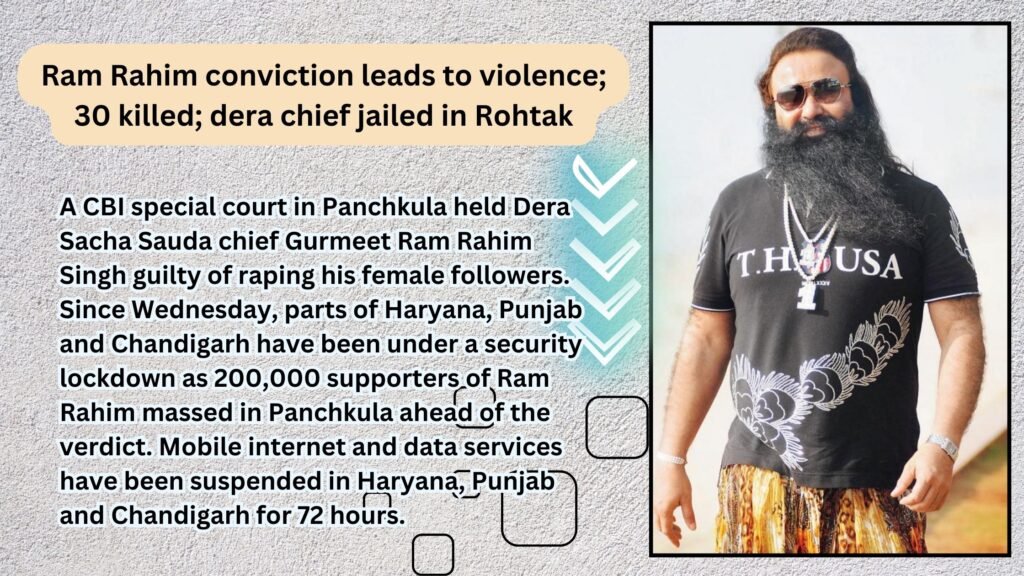
    The case of Gurmeet Ram Rahim Singh, a self-styled godman and leader of the Dera Sacha Sauda, has captivated the public and media for years due to its shocking revelations and significant impact on society.

    Understanding this case is crucial to comprehend the interplay of power, religion, and justice in contemporary India.

    Brief Overview of the Ram Rahim Case

    Gurmeet Ram Rahim Singh, the head of the Dera Sacha Sauda, faced serious allegations ranging from sexual assault to murder.

    His conviction in 2017 led to widespread violence, bringing the functioning and influence of spiritual organizations in India under scrutiny.

    Importance of Understanding the Case

    The Ram Rahim case highlights critical issues related to the abuse of power, the manipulation of religious sentiments, and the challenges faced by legal systems in dealing with influential figures.

    It also underscores the societal impact of such cases on followers and the broader community.

    Background of Ram Rahim

    Early Life and Rise to Power

    Gurmeet Ram Rahim Singh was born on August 15, 1967, in Sri Gurusar Modia, Rajasthan. He became the leader of Dera Sacha Sauda in 1990, succeeding Shah Satnam Singh, and quickly rose to prominence due to his charismatic leadership and social work.

    Role as a Leader of Dera Sacha Sauda

    Under his leadership, Dera Sacha Sauda expanded its influence significantly, claiming millions of followers and engaging in various social welfare activities.

    Ram Rahim’s image was carefully crafted through his involvement in entertainment and media.

    Dera Sacha Sauda: An Overview

    Origin and Mission

    Founded in 1948 by Mastana Balochistani, Dera Sacha Sauda’s mission revolves around spiritual teachings, social service, and promoting a drug-free lifestyle. The sect combines elements of Sikhism and Hinduism, attracting a diverse following.

    Influence and Followers

    The organization claims to have millions of followers worldwide, particularly in the states of Haryana and Punjab.

    It operates numerous ashrams, hospitals, and educational institutions, significantly impacting the local communities.

    The Allegations Against Ram Rahim

    Initial Allegations and Investigation

    The first major allegations against Ram Rahim emerged in the early 2000s when two female followers accused him of rape.

    A letter detailing these accusations reached the Punjab and Haryana High Court in 2002, prompting an investigation by the Central Bureau of Investigation (CBI).

    Nature of the Crimes

    Ram Rahim was accused of sexually assaulting female followers, murdering journalist Ram Chander Chhatrapati (who exposed his activities), and coercing followers into illegal activities. The allegations painted a grim picture of exploitation and violence within the Dera.

    Key Events in the Case

    Timeline of Major Events

    • 2002: Allegations of rape surface, and the CBI begins its investigation.
    • 2007: Charges are filed against Ram Rahim.
    • 2017: Ram Rahim is convicted of rape, leading to widespread violence.
    • 2019: Conviction in the murder case of journalist Ram Chander Chhatrapati.

    Arrest and Legal Proceedings

    Ram Rahim was arrested in August 2017 following his conviction in the rape case. The legal proceedings were marked by high security and significant public interest.

    The Conviction and Sentencing

    Details of the Trial

    The trial took place in a specially convened court in Haryana, where Ram Rahim was found guilty of raping two female followers.

    The judge described him as a “wild beast” who deserved no leniency.

    Sentencing and Public Reaction

    Ram Rahim was sentenced to 20 years in prison. The conviction led to violent protests by his followers, resulting in deaths and widespread destruction.

    The public reaction was polarized, with many supporting the victims and others in denial of his crimes.

    Impact on Followers and the Community

    Reactions from Followers

    The conviction led to a deep sense of betrayal among many followers, some of whom continued to support Ram Rahim, believing in his innocence.

    Others left the Dera, disillusioned by the revelations.

    Social and Cultural Impact

    The case highlighted the dangers of blind faith and the potential for abuse within religious organizations.

    It sparked debates on the need for greater oversight and accountability.

    Controversies and Conspiracy Theories

    Major Controversies Surrounding the Case

    The case was surrounded by various controversies, including allegations of political patronage, manipulation of evidence, and attempts to influence witnesses. These controversies added layers of complexity to the proceedings.

    Media Coverage and Public Perception

    The media played a crucial role in bringing the case to light, but it also faced criticism for sensationalism.

     Public perception was divided, reflecting broader societal tensions regarding faith and justice.

    Political Implications

    Government Response

    The government’s response included imposing curfews and deploying military forces to control the violence following the conviction.

     The case also led to calls for stricter regulations on religious organizations.

    Legal and Ethical Considerations

    The legal ramifications included discussions on the protection of witnesses, the efficiency of the judicial process, and the ethical responsibilities of religious leaders. The case underscored the need for a balanced approach to justice and faith.

    The Aftermath

    Current Status of Ram Rahim

    As of now, Ram Rahim remains incarcerated, serving his sentence. His appeals for bail and leniency have been consistently denied by the courts.

    Changes in Dera Sacha Sauda

    The Dera continues to operate under new leadership, but its influence has waned significantly. Efforts have been made to distance the organization from Ram Rahim’s criminal activities.

    Lessons Learned from the Case

    Insights and Takeaways

    The Ram Rahim case offers critical insights into the vulnerabilities within religious institutions and the importance of legal accountability.

    It also highlights the need for greater awareness and education among followers to prevent exploitation.

    Comparative Analysis with Other Cases

    Comparisons can be drawn with other high-profile cases of religious leaders abusing power, such as Asaram Bapu and Swami Nithyananda.

    These cases collectively underscore the recurring issues of unchecked authority and the exploitation of faith.

    Conclusion

    The Ram Rahim case serves as a stark reminder of the potential for abuse within religious organizations and the importance of vigilance, transparency, and justice.

    It calls for introspection within society regarding the balance between faith and rationality.

    FAQs

    What are the main charges against Ram Rahim?

    The main charges against Ram Rahim include rape, murder, and criminal intimidation. He was convicted of raping two female followers and for his involvement in the murder of journalist Ram Chander Chhatrapati.

    How did Ram Rahim maintain his influence over followers?

    Ram Rahim maintained his influence through a combination of charisma, social welfare activities, and the promise of spiritual guidance. His control was also reinforced by fear and coercion, making it difficult for followers to dissent.


  • Anti-Microbial Resistance: bacteria kill 5million people every year, says Lancet study

    Overview:

    What is Anti-Microbial Resistance?

    Anti-microbial resistance (AMR) occurs when microorganisms such as bacteria, viruses, fungi, and parasites evolve mechanisms to resist the effects of medications that once effectively treated them.

    This resistance renders standard treatments ineffective, leading to persistent infections, increased transmission, and higher mortality rates. AMR is a natural phenomenon accelerated by human actions, posing a significant threat to global health, food security, and development.

    Reasons for Anti-Microbial Resistance

    1. Overuse and Misuse of Antibiotics:
      • Human Medicine: The inappropriate prescription of antibiotics for viral infections, like the common cold, and the excessive use of broad-spectrum antibiotics contribute to resistance.
      • Patients often demand antibiotics, and physicians may yield to pressure even when not medically justified.
      • Agriculture: The widespread use of antibiotics in livestock for growth promotion and disease prevention contributes significantly to AMR.
      • Antibiotics are often administered to healthy animals, creating a breeding ground for resistant bacteria that can transfer to humans through food consumption.
    2. Poor Infection Prevention and Control:
      • Healthcare Settings: Inadequate infection control practices in hospitals and clinics, including poor hand hygiene and sterilization protocols, can lead to the spread of resistant bacteria.
      • Community Settings: Lack of public health infrastructure and sanitation in many parts of the world contributes to the spread of infections and the emergence of resistance.
    3. Lack of New Antibiotics:
      • The pharmaceutical industry faces significant challenges in developing new antibiotics due to scientific, regulatory, and economic barriers.
      • The process is costly and time-consuming, with a limited return on investment compared to drugs for chronic diseases, leading to a stagnant pipeline of new antimicrobial agents.
    4. Global Travel and Trade:
      • The interconnectedness of the world through travel and trade facilitates the rapid spread of resistant bacteria across borders.
      • Infections resistant to treatment in one region can quickly become a global issue.
    5. Environmental Factors:
      • Environmental contamination with antibiotics from pharmaceutical manufacturing, agricultural runoff, and improper disposal of medical waste contributes to the presence of antibiotics in the environment, fostering resistance in natural microbial communities.

    Confronting Anti-Microbial Resistance Effectively

    1. Strengthening Surveillance Systems:
      • Monitoring and Data Collection: Establish robust global and national surveillance systems to monitor AMR trends.
      • Data on resistance patterns can inform targeted interventions and policy decisions.
      • International Collaboration: Enhance cooperation among countries to share data and resources, enabling a coordinated global response to AMR.
    2. Optimizing Antibiotic Use:
      • Antimicrobial Stewardship Programs (ASPs): Implement ASPs in healthcare settings to promote the appropriate use of antibiotics.
      • These programs involve guidelines for prescribing antibiotics, education for healthcare providers, and monitoring of antibiotic use and resistance.
      • Public Awareness Campaigns: Educate the public on the dangers of antibiotic misuse and the importance of following prescribed treatments.
      • Campaigns can reduce the demand for unnecessary antibiotics and promote adherence to prescribed regimens.
    3. Infection Prevention and Control (IPC):
      • Healthcare Practices: Strengthen IPC measures in hospitals and clinics, including strict hand hygiene, sterilization protocols, and isolation procedures for patients with resistant infections.
      • Vaccination Programs: Promote vaccination to reduce the incidence of infections, thereby decreasing the need for antibiotics and the opportunity for resistance to develop.
    4. Research and Development (R&D):
      • New Antibiotics: Encourage investment in R&D for new antibiotics through incentives such as public-private partnerships, grants, and streamlined regulatory processes.
      • Governments and international organizations can play a crucial role in supporting research initiatives.
      • Alternative Therapies: Explore and develop alternative treatments to antibiotics, such as phage therapy, immunotherapies, and probiotics, to provide additional tools for combating infections.
    5. Environmental Measures:
      • Regulation of Antibiotic Use in Agriculture: Implement regulations to limit the use of antibiotics in livestock and promote alternative practices for disease prevention, such as improved animal husbandry and vaccination.
      • Environmental Management: Address environmental contamination by regulating the discharge of antibiotics from pharmaceutical factories and improving waste management practices to reduce the spread of resistant bacteria in the environment.
    6. Strengthening Global Governance and Policy:
      • International Agreements: Foster international agreements and frameworks to combat AMR, such as the World Health Organization’s (WHO) Global Action Plan on AMR.
      • These frameworks should encourage coordinated efforts and resource sharing among nations.
      • National Action Plans: Develop and implement national action plans tailored to the specific needs and challenges of each country, aligning with global strategies to address AMR comprehensively.

    Conclusion

    Anti-microbial resistance is a complex and multifaceted challenge that requires a coordinated global response. Understanding the underlying causes of AMR, including the overuse and misuse of antibiotics, poor infection control practices, lack of new antibiotics, global travel and trade, and environmental factors, is crucial for developing effective strategies to combat it.

     By strengthening surveillance systems, optimizing antibiotic use, enhancing infection prevention and control, investing in research and development, implementing environmental measures, and fostering strong global governance, we can confront AMR effectively and safeguard the health of future generations.

  • Why ‘Buying London’ Might Be the Most Despised TV Show Ever

    Introduction

    Real estate shows are a staple of modern television, offering viewers a peek into the world of high-stakes property deals and luxurious living. However, not all of these shows hit the mark.

    Over view

    ‘Buying London,’ a real estate series set in one of the world’s most expensive and exclusive cities, has garnered strong negative reactions from audiences. This blog post aims to dissect why ‘Buying London’ is often considered the most hateable TV show ever made.

    Section 1: The Concept of ‘Buying London’

    Synopsis and Format

    ‘Buying London’ follows prospective buyers as they tour some of the most extravagant properties in the British capital.

    Each episode typically features a different real estate agent showing high-end homes to wealthy clients, often accompanied by discussions about property values, market trends, and investment potential.

    Target Audience

    The show is aimed at real estate enthusiasts, luxury lifestyle aficionados, and viewers who enjoy aspirational content.

    However, its appeal is intended for those fascinated by London’s elite property market, which is inherently exclusive and far removed from the realities of most viewers’ lives.

    Why It Misses the Mark

    ‘Buying London’ falls short because it often alienates its audience. The show’s format and content are steeped in wealth and luxury, making it difficult for average viewers to relate.

     The constant display of affluence and the lack of genuine human connection or relatable struggles make the show feel out of touch and unapproachable.

    Section 2: Characters and Hosts

    Host Analysis

    The hosts of ‘Buying London’ are polished and professional, but they often come across as overly slick and insincere.

    Their presentation style can feel more like sales pitches than genuine conversations, which can be off-putting to viewers seeking authenticity.

    Participant Profiles

    The buyers featured on the show are typically wealthy individuals or couples looking for high-end properties.

    They are often portrayed as demanding and out of touch with reality, which can make them unlikeable and difficult for viewers to empathize with.

    Chemistry and Interaction

    The interaction between hosts and participants often lacks warmth and authenticity. The conversations are heavily transactional, focusing on property features and investment potential rather than personal stories or emotional connections.

    This transactional nature contributes to the show’s negative perception, as it feels more like a commercial than a human interest story.

    Section 3: Production and Aesthetic Issues

    Visual and Audio Quality

    While the production values are generally high, with slick visuals and clear audio, the show’s aesthetic can come across as overly polished and artificial.

    This level of polish can make the show feel sterile and devoid of personality.

    Script and Dialogue

    The scripting and dialogue are another major issue. The conversations often feel rehearsed and unnatural, lacking the spontaneity and genuine emotion that make reality TV engaging.

    This scripted feel detracts from the viewing experience, making it hard to invest in the show.

    Editing Choices

    The editing style of ‘Buying London’ is fast-paced and flashy, with quick cuts and dramatic music.

    While this might be intended to create excitement, it often has the opposite effect, making the show feel chaotic and hard to follow.

    The editing choices can also detract from the properties themselves, as the camera rarely lingers long enough for viewers to appreciate the details of the homes being shown.

    Section 4: Cultural and Societal Missteps

    Portrayal of Wealth

    One of the most significant criticisms of ‘Buying London’ is its portrayal of wealth. The show unabashedly flaunts luxury and excess, which can come across as tone-deaf, especially in a time when economic inequality is a pressing issue.

    The focus on opulence can be jarring and unappealing to viewers who are dealing with more modest financial realities.

    Cultural Insensitivity

    There are instances where ‘Buying London’ seems out of touch with broader societal issues. For example, the show’s emphasis on expensive properties and affluent buyers can feel insensitive in the context of London’s housing crisis, where affordable housing is a significant concern.

    This lack of awareness can alienate viewers and contribute to the show’s negative reputation.

    Public Reaction

    The public and critical backlash to ‘Buying London’ has been significant.

    Social media is rife with negative comments, with viewers expressing frustration and distaste for the show’s focus on wealth and superficiality.

     Reviews often highlight the show’s lack of relatability and emotional depth, further cementing its status as one of the most despised TV shows.

    Section 5: Is There Any Redeeming Value?

    Counterpoints

    Despite its many flaws, ‘Buying London’ does have some redeeming qualities.

     For those interested in the high-end property market, the show offers a glimpse into some of the most exclusive homes in London.

    The production values, while sometimes overly polished, do provide a visually appealing viewing experience.

    Potential Improvements

    To improve, ‘Buying London’ could focus more on the human stories behind the property transactions.

    Including more diverse buyers and highlighting their personal journeys and challenges could make the show more relatable and engaging.

    Additionally, toning down the excessive focus on wealth and luxury and addressing broader societal issues more sensitively could help the show connect with a wider audience.

    Conclusion

    Summary of Criticism

    ‘Buying London’ is often considered the most hateable TV show due to its unrelatable concept, unlikeable characters, overly polished production, and cultural insensitivity.

     The show’s focus on wealth and luxury alienates viewers and feels out of touch with broader societal issues.

    Final Thoughts

    The impact of shows like ‘Buying London’ on the real estate reality TV genre and television, in general, is significant.

    They highlight the growing divide between the wealthy and the average viewer, and the need for more inclusive and relatable content in reality TV.

    Call to Action

    What are your thoughts and experiences with ‘Buying London’?

    Do you agree with the criticisms, or do you find some value in the show?

    Share your thoughts in the comments below.